Best Phone Plan in Korea for Foreigners: SIM, eSIM or Contract (2026)
The best phone plan in Korea for foreigners is a prepaid SIM or data eSIM if you stay under about a month, and an MVNO or carrier postpaid plan once you hold a Residence Card and plan to stay for months. The deciding factor is rarely price. It is whether you need a Korean phone number and whether you can prove who you are to a carrier.
My read, after sorting through carrier counters, resident forums and the news coverage of this year’s rule changes: most people overspend or get stuck because they buy for the first week instead of the first month. This guide is written for Americans, whether you are landing for a vacation, a semester or a job posting. I could not open the carriers’ own pages from here, so figures below come from search results and are marked as approximate. Confirm them before you pay.
What is the best phone plan in Korea for foreigners?
There is no single winner. There are four tiers, and you move up them as your stay gets longer.
| Stay | Best fit | Korean number | What you need |
|---|---|---|---|
| 1 to 3 days | Your US carrier’s international pass | No, you keep your US number | Check per-day fee on your plan |
| 4 days to 1 month | Data eSIM or airport prepaid SIM | eSIM usually no, SIM often yes | Unlocked phone, passport for SIM |
| 1 to 3 months | Rechargeable prepaid SIM | Yes | Passport, card or cash for top-ups |
| 3+ months with a Residence Card | MVNO or carrier postpaid | Yes | Residence Card, payment method in your name |
Think of it as a ladder. Each rung up costs less per day but asks for more paperwork. The paperwork is where people stall, so the rest of this article spends most of its time there.
Is an eSIM or a physical SIM better for a short trip?
For pure data, an eSIM wins on convenience. You buy it before you fly, scan a QR code, and land connected. Tourist eSIM guides, most written by eSIM sellers so read them with a grain of salt, consistently say eSIMs are cheaper for a week-long trip and are data-only, meaning no Korean phone number.
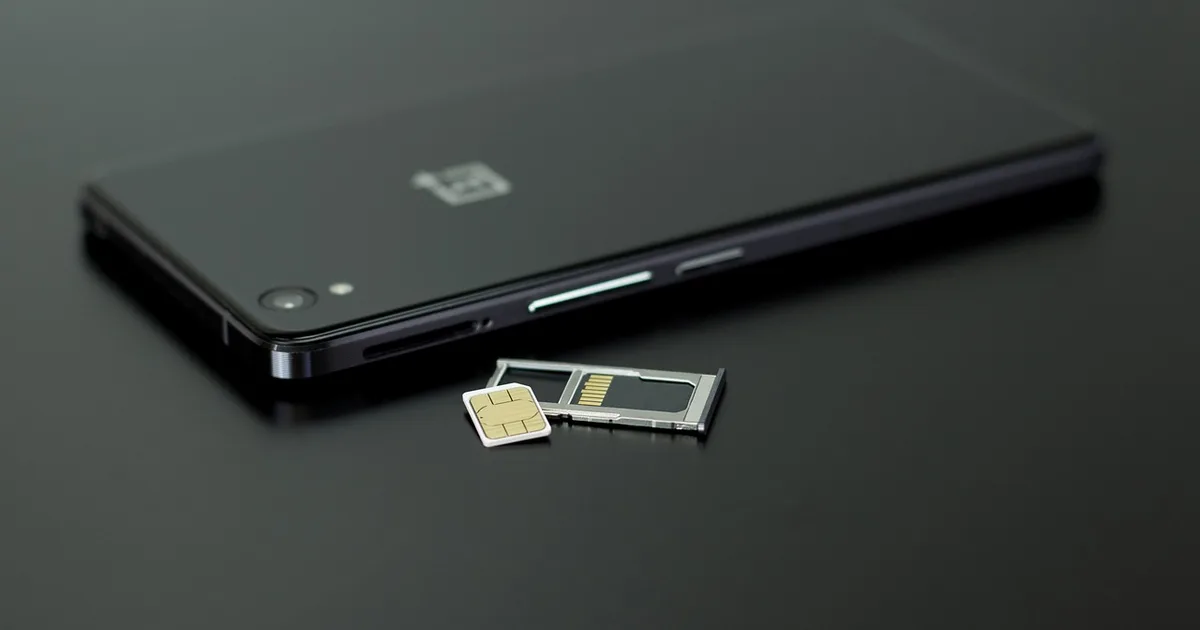
A physical SIM from the airport takes a counter visit, and you show your passport. Incheon has counters for SK Telecom, KT and LG U+, according to travel-guide listings. One listing priced an SK Telecom one-day SIM at around 6,500 won and a seven-day SIM around 35,000 won, with a 30-day option around 71,500 won. KT’s prepaid welcome plan appeared at about 35,000 won for 30 days with a modest full-speed data allowance. Those numbers came from reseller pages with unclear dates, so treat them as ballpark and ask for the total before paying.
| Factor | Data eSIM | Airport prepaid SIM |
|---|---|---|
| Setup | Online, before you fly | Counter visit with passport |
| Korean number | Usually none | Often included |
| Wait on arrival | None | Depends on the line |
| Phone requirement | eSIM-capable and unlocked | SIM slot and unlocked |
| Weak spot | No SMS verification | Physical card to lose |
SK Telecom sells its own visitor eSIM through its SK Roaming site, according to travel guides. Whichever you pick, one thing decides whether it works at all: your phone must be unlocked.
Will my US phone work in Korea?
Almost certainly, if it was made in the last few years and is unlocked. Recent iPhones, Galaxy and Pixel phones cover Korean LTE and 5G bands. The catch is the lock. A phone that is still financed through a US carrier may refuse a foreign SIM.
Do this before you leave: ask your carrier to confirm the phone is unlocked or request an unlock, and write down your IMEI. If the phone is paid off, most US carriers will unlock it on request, though timelines vary. If the phone is still on an installment plan, you may need to rely on your carrier’s international pass instead.
If you are coming for a job or study and will switch phones, my phone-to-phone data transfer guide covers moving your data before you wipe the old one.
Can foreigners get a phone contract in Korea?
Yes, but not on arrival. Postpaid plans from KT, SK Telecom and LG U+ generally require a Residence Card and a payment method in your own name. Guides describe the document set as a passport, the Residence Card, and a Korean bank account for automatic transfer. One 2026 write-up on LG U+ said its 12-month postpaid plans are for Residence Card holders whose card is valid for at least 12 months, and that tourist visas do not qualify. That is a single guide, so ask the store for the current rule.
A small naming note. The card many expats still call the Alien Registration Card was officially renamed the Residence Card in 2021, according to expat guides. Staff and forums use both terms. You apply through immigration, and the government’s Hi Korea portal is the official place for the procedure.
Why does the process loop back on itself?
It does, and nearly every new arrival hits the same wall. A bank wants your Residence Card and a Korean phone number to open an account. A carrier wants a bank account to bill you. The Residence Card itself can take several weeks, depending on the immigration office.
The way out is sequencing:
- Buy a prepaid SIM at the airport so you have a Korean number from day one.
- Use that number to book your immigration appointment and file your Residence Card application.
- Open a bank account once the card arrives. My guide to opening a bank account in Korea as a foreigner walks through that step.
- Move to a postpaid plan or an MVNO.
Budget for the prepaid stretch. It is the most expensive per-day period of your stay, but there is no way around it.
Do Korean MVNOs accept foreigners, and are they worth it?
Some do. An MVNO is a budget carrier that rents the big three’s networks, which Koreans call 알뜰폰 (alddeulpon). Search results show mixed signals. MVNOs run the same identity checks as big carriers, using a passport or Residence Card. Community answers say some plans exclude foreigners entirely, and some stores restrict which nationalities they will activate. One news report said LG U+‘s MVNO brand introduced foreigner self-activation, while another described a university and KT arrangement letting students activate with just a passport. That second one applies to that school’s students only.
| Question | MVNO | Big three postpaid |
|---|---|---|
| Monthly price | Usually lower | Usually higher |
| Foreigner eligibility | Varies by provider, confirm first | Residence Card plus payment method is the norm |
| In-person help | Limited | Stores nationwide |
| English support | Varies | Some stores or foreigner desks |
| Good for | Price-sensitive residents with some Korean | People who want hand-holding |
If your Korean is limited, I would not do your first activation online. Verification steps can stall halfway, and a store clerk can fix in five minutes what takes an hour of retries online. Once you understand your plan, moving to an MVNO later is a sensible way to cut your bill. My internet and phone plan comparison is a good next read for the cost side.
What changed with phone activation in 2026?
Face authentication arrived. Korea’s science ministry said, according to a news report on its announcement, that from July 6, 2026 it would phase in face authentication for activations at the three carriers and MVNOs, in stores and online, starting with new lines and number transfers. The aim is to stop burner phones and identity theft.
Two details matter to you. First, if face authentication fails, reports say alternative proofs such as a mobile ID or a residence record are offered, though the final operating details were described as still being settled. Second, lines opened under foreign names were reported as a second-half item, since the industry flagged abuse of foreign-name lines. So I cannot tell you exactly how the face step treats a foreign passport holder today. I did not verify it against the ministry’s own release. Ask the store on the day, and bring your passport original and your Residence Card.
Why doesn’t my Korean number work for bank and government apps?
Because Korean identity verification is built on a line registered to a named person. A tourist prepaid number or a data-only product often is not, so bank, payment and government apps may reject it even though the number receives texts fine. One guide put it plainly: a number bundled with a tourist plan does not mean it can be used for identity checks.
What works where, roughly:
- Receiving a text code: often fine on a prepaid number.
- Bank apps, mobile payments, government portals: need a long-term line tied to your Residence Card.
- Shopping sites: varies, so try each one.
If payments are your sticking point, my guide to Apple Pay in Korea shows what foreign cards can do while you wait for verification.
What does a bad plan choice look like?
This is a composite built from the situations I hear about most, not one person’s story.
A US exchange student arrives for a three-month program with only a data eSIM. Maps and translation work well. Then the dorm asks for a rent transfer through a bank app that texts a verification code, and there is no Korean number to receive it. Stores are closing, the airport is two hours away, and the student spends two days on a borrowed hotspot before finding a prepaid SIM.
The lesson is blunt. If there is any chance you will need a Korean number, buy the SIM that comes with one. Saving a few dollars on an eSIM is a bad trade if it costs you two days.
What should I check before I buy?
Run through this list the day before you fly.
- Is your phone carrier-unlocked, and does the model support Korean bands?
- Do you have the passport original, not a copy or photo?
- Do you already hold a Residence Card, and how long is it valid?
- Do you have a bank account or credit card in your own name that Korean carriers can bill?
- Will you need a Korean number for apps, deliveries or clinics?
- Does the plan charge for outgoing calls? Guides say several tourist plans include free incoming calls but need credit for outgoing.
- What happens to the number when the plan ends?
If you are going as a traveler instead of a resident, my solo travel guide for Korea and currency exchange tips pair well with this checklist, and travel insurance comparison is worth reading before any international trip.
Quick picks by situation. Here is how I would decide, given nothing else about you. Ask yourself two questions: how many weeks will I be here, and will anything in my daily life require a Korean number? Answer those honestly and the choice mostly makes itself, because the cheapest option that fails on either count ends up costing more than the one that works the first time.
- One-week vacation: one data eSIM, no number needed.
- One-month work trip: airport prepaid SIM with a number, top up by card.
- Six months or more for study or work: prepaid first, Residence Card second, bank account third, then an MVNO or carrier plan. If your Korean is thin, make that first postpaid activation in a store.
- Unsure how long you will stay: pick the SIM that comes with a number. It rarely hurts, and it often saves you.
Prices, promotions and foreigner eligibility rules change often, and I leaned on third-party guides for several items. This reflects what I could confirm as of October 2026. Check the carrier or MVNO page or ask in-store before you commit.
This article is general information, not legal, immigration or financial advice. Carrier prices, eligibility rules and identity verification procedures change; confirm current terms with the provider and official Korean government channels before you buy or apply.
What is the best phone plan in Korea for foreigners?
It depends on how long you stay. For a trip of a few days to a month, a data eSIM or an airport prepaid SIM is usually simplest. If you hold a Residence Card and plan to stay for months, an MVNO or a carrier postpaid plan is typically cheaper per month. Check each provider's official page for current prices.
Can foreigners get a phone contract in Korea?
Yes, but postpaid plans from KT, SK Telecom and LG U+ generally ask for a Residence Card and a payment method in your own name. Tourists on B-1 or B-2 status are normally limited to prepaid products.
Is an eSIM or a physical SIM better for a US traveler?
An eSIM is faster to set up and needs no counter visit, but most tourist eSIMs are data-only and have no Korean phone number. A physical prepaid SIM often comes with a number. Your phone must be carrier-unlocked for either.
Will my US phone work in Korea?
Most recent iPhones and Galaxy or Pixel models support Korean networks, but a phone still locked to a US carrier may reject a local SIM. Ask your carrier to unlock it before you fly and confirm your model's band support.
Do I need my passport to buy a SIM in Korea?
For a physical tourist SIM, yes. Airport counters and stores check a passport, and some may refuse photocopies or photos. Online eSIM purchases usually do not ask for a passport.
Should I just use my US carrier's international plan instead?
For two or three days it is often the least hassle, since you keep your US number. For a week or more, a local SIM or eSIM is usually cheaper than daily pass pricing. Compare the per-day fee on your plan before you decide.
Can I open a Korean phone line without a Korean bank account?
Prepaid lines generally do not need one. For postpaid, carriers usually want an account or credit card in your name, though guides disagree on MVNOs. Ask the specific provider before you apply.
Why can't I use my tourist SIM number for Korean bank apps?
Korean identity verification relies on a line registered to you by name with a carrier. Tourist prepaid numbers and data products often do not qualify, so bank and government apps may reject them.
What changed with phone activation in Korea in 2026?
Korea's science ministry announced that from July 6, 2026 it would phase in face authentication for new activations and number transfers at the big three carriers and MVNOs. How this applies to foreign-name lines was reported as a second-half item, so ask in the store.
How long does it take to get a Residence Card?
Guides describe several weeks, varying by immigration office. Plan a prepaid line for that gap.
관련 글

How to Choose Cat Litter: Clay, Silica, Tofu and Pine Compared (2026)

How to Choose Hand Warmers in 2026: Types, Burn Safety, Cost per Hour

Netflix Account Sharing Rules 2026: Households, Extra Members and Costs in the US

Mini Split vs Window AC: Noise Levels Compared (2026 Guide)

Indoor Laundry Drying Tips for Pollen and Allergy Season 2026