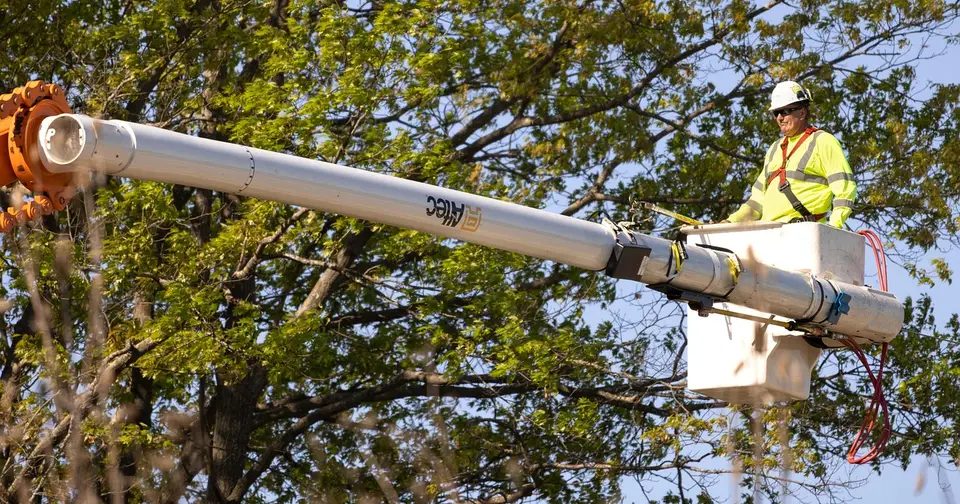
Tree Service Business Insurance Cost 2026: What Tree Removal Companies Really Pay
What does tree service business insurance cost in 2026?
Tree service business insurance for a small crew usually costs low-to-mid five figures a year once you stack liability, workers’ comp, trucks and equipment, with workers’ comp as the biggest single line. Quote-comparison sites in late 2026 put averages for general liability around $1,400 to $1,900 a year and workers’ comp around $2,200 to $2,600.
Those are the two numbers that get repeated everywhere, so here is where they come from. Insureon reports tree service contractors averaging about $1,875 a year for general liability and about $2,580 for workers’ comp. TechInsurance shows about $1,651 and $2,235. One broker guide I found estimates a full package for a small owner-operator with one or two trucks and a limited crew at roughly $6,500 to $14,000 a year. All of these are marketplace averages that I read in search summaries as of November 2026, not quotes, and I did not open every underlying page.
Treat the averages as a floor for a cautious owner, not a target. They blend part-time crews, solo climbers and low-cost states. A crew of six doing aerial removals in New Jersey or Illinois will not pay the same as two guys trimming ornamental pears in Ohio.
| Coverage | Typical published average (US, annual) | Main driver |
|---|---|---|
| General liability | about $1,400 - $1,900 | revenue, work height, limits, state |
| Workers’ comp | about $2,200 - $2,600 for a very small crew; far more with real payroll | payroll by class code, state, experience mod |
| Commercial auto | often $1,500+ per vehicle, much more for heavy trucks | vehicle weight, drivers, radius |
| Inland marine (equipment) | a few hundred to several thousand | scheduled value of chippers, lifts, grinders |
| Umbrella | varies widely | underlying limits, claims history |
| Full small-company package | roughly $6,500 - $14,000 per one broker estimate | all of the above |
Why such a wide spread? Because tree work is priced as a hazard class, not as a service category. The same chainsaw that costs a mowing company little in premium becomes a major rate driver once it is 50 feet in the air.
Why is tree removal one of the costliest trades to insure?
Insurers price tree work high because the three worst loss types meet in one job: serious injury to workers, damage to a customer’s property, and contact with electrical lines. Each of them can be a six-figure claim on its own.
Think about what a normal removal looks like. A climber rigs a limb, a groundman handles the rope, a chipper is running, and the work site is a backyard with a house, a pool, a fence and a neighbor’s car within drop range. Any one of those can go wrong in seconds. The injury side is the reason the workers’ compensation class and rates for tree trimming sit so far above general landscaping.
The liability side is just as real. Property damage from a dropped trunk, a rigging failure, a crushed fence or a hit on an irrigation line is the classic tree-company claim. And because the damaged thing is usually a house or a vehicle rather than a flowerbed, the dollar amount is bigger.
If you also mow lawns, the premium shift from adding tree work is one of the sharper jumps in the industry. The sibling guide on landscaping business insurance explains how a mowing-only company is rated, and it is a useful baseline to see how far tree work moves you off it.
What is the workers’ comp class code for tree trimming and removal?
The standard NCCI code is 0106, titled Tree Pruning, Spraying, Repairing - All Operations and Drivers. Some states use their own wording, and some removal or ground work may be classified under a different code.
This is a detail worth pinning down, because the code, not your invoice, decides what you pay. In search results I found third-party class lookup pages listing 0106 with the title above. The title does not name removal, and one source says most incidental removal is covered. California’s rating bureau, the WCIRB, uses “Tree Pruning, Repairing or Trimming” and notes that some tree work falls into landscape gardening, code 0042. Washington has its own 0106-00 for tree care. I could not open the NCCI manual itself, so confirm the scope with your carrier.
Workers’ comp is charged per $100 of payroll. That means three things matter:
- How you split payroll. A ground worker who only drags brush and a climber who works aloft may rate differently or not, depending on state rules. Do not assume; ask.
- Clerical staff. Office staff can usually be rated in a much cheaper clerical class if they are truly separate from field work.
- Your experience mod. A mod under 1.0 means your safety record earned a discount. A mod over 1.0 means you pay more than base. TCIA’s own insurance underwriting primer makes this point and lists accreditation and safety credentials as ways to show commitment to safety.
The deeper mechanics of class codes, mods and audits are covered in our guide to workers’ compensation insurance costs. For tree companies the practical rule is simple: payroll hours spent aloft should be documented, and so should the hours that are not.
What does general liability cover for a tree company, and where are the gaps?
General liability pays for injury and property damage you cause to other people, and it is the policy that customers, property managers and municipalities ask to see first. For tree work, the exclusions matter more than the headline limit.
A typical limit is $1 million per occurrence and $2 million aggregate. That is where the quoting starts, not where it ends. Read the policy for these exclusions or limitations, which several broker guides flag as common in tree-care forms:
- Crane picks, aerial lifts and rigging. Some forms exclude or restrict these unless endorsed. A truck-mounted crane or a rented crane working a pick can fall between your auto policy and your liability policy.
- Work near power lines. Contact with energized lines can be limited or excluded. OSHA treats work within 10 feet of energized lines as a special category; its tree care standards page explains that line-clearance work falls under 29 CFR 1910.269 and that the ANSI Z133 standards are voluntary consensus standards rather than OSHA rules. I opened neither page in full, so check the current text.
- Damage to the tree or property being worked on. The classic care, custody and control exclusion. If your crew drops the wrong tree, your policy may pay for the neighbor’s fence and not for the tree you were hired to take.
- Pesticide and fertilizer application. If you spray, you need a pollution or pesticide endorsement. The pest control insurance guide explains why that single rider is often the whole conversation.
- Subcontractors. Many forms charge extra or exclude work done by uninsured subs.
A policy with a big limit and a crane exclusion is a nice-looking document that fails on the job you actually bought it for. Ask your broker to show you the exclusion list, not just the declarations page.
What does commercial auto cost for chipper trucks and bucket trucks?
Commercial auto for a tree company is priced per vehicle, and the heavy, specialized units cost far more than a pickup. Many broker guides cite roughly $1,500 or more per standard vehicle, and bucket trucks, chip trucks and dump trucks run well above that.
A personal auto policy generally does not respond to a business truck hauling a chipper to a paid job. Even a modest crew with a pickup, a chipper trailer and a chip truck is rating three units with three different exposures. Driver records matter as much as the vehicle: one at-fault driver with a bad MVR can add to every truck on the fleet policy.
Two things tree owners get wrong here. First, they buy auto for the truck and forget that the attached equipment is not part of it. A bucket on a truck, a grapple, or a crane body is a specialized attachment that standard auto forms may treat differently. Second, they leave out drivers who only run the chip truck “occasionally”. Disclose every driver; an undisclosed driver is a claim denial waiting for a bad day.
For the pricing mechanics of fleets, radius, weight class and driver scoring, see our commercial auto insurance cost guide. The same drivers that shape a landscaper’s rate shape yours, only with heavier vehicles.
How does inland marine cover chippers, stump grinders and cranes?
Inland marine is the policy that pays when your own equipment is stolen, damaged, or lost, usually including in transit and at job sites. Chippers, stump grinders, lifts and climbing gear are the standard items to schedule.
If your equipment is worth real money, this is one of the cheapest lines relative to the loss it covers. Broker guides say that if you do not list specific high-value machines, such as a chipper, a bucket truck, or a lift, you may not be reimbursed when they are stolen or damaged. A chipper alone can run in the tens of thousands of dollars new, and an unscheduled one is a gamble.
The questions to ask your broker:
| Question | Why it matters |
|---|---|
| Is each machine scheduled with an agreed or stated value? | avoids a depreciation fight after a theft |
| Does coverage apply in transit and on a trailer? | many thefts and damage happen on the road |
| Are attachments and truck-mounted equipment covered by auto or inland marine? | this is the classic gap |
| What is the rule for rented or borrowed equipment? | a rented crane may not be covered by you |
| What are the theft conditions? | some forms require locked or garaged storage |
A full explanation of what inland marine covers and how it is rated is in the inland marine insurance cost guide. If the answer is “my own policy does not cover a crane I rent”, ask the rental company which policy responds and get that in writing.
Do you need an umbrella policy for a tree service?
For most tree companies, yes, once you take jobs near houses or commercial buildings. A single serious property-damage or injury claim can exceed a $1 million primary limit, and many commercial contracts ask for an umbrella outright.
An umbrella adds limits on top of general liability, commercial auto and employer’s liability. The catch for tree work is that umbrella carriers often follow the exclusions of the underlying policy, and some will not write high-hazard tree work at all or will require the underlying policies to be with specific carriers. Do not assume an umbrella will cover what your primary excludes. Our commercial umbrella insurance guide covers how limits stack and what the layers typically do not pay.
If you also haul debris to a dump or run a side line, check how that work is rated; the sibling guide on junk removal business insurance shows how hauling exposure is treated differently from tree work.
Can ISA certification and safety credentials lower your premium?
They can help, but nobody publishes a fixed discount. Carriers weigh them as signs of a lower-risk operation, and some trade-association programs make them a condition of getting in.
What I could source: Insureon says tree and landscaping businesses may qualify for lower rates with documented training, regular equipment maintenance, strong safety practices, or ISA-certified arborists. TCIA’s insurance primer lists TCIA accreditation, ISA Certified Arborist credentials and Certified Treecare Safety Professional designations as ways to show a safety culture. The TCIA-endorsed ArborMAX program states that only TCIA members who are accredited or employ a full-time CTSP are eligible for workers’ comp through it. A testimonial on a TCIA page says accreditation and a CTSP saved one company real money. That is one customer’s account, not a schedule.
The honest way to use this:
- Get the credential for the safety, not the discount. ISA and TCIA training changes how crews rig, communicate and use PPE.
- Document it. A written safety program, tailgate meeting logs, equipment inspection records and training certificates are what an underwriter can actually rate.
- Ask for the credit. If a carrier does not offer one, another may. A specialty tree-care program is worth a quote.
- Work your mod. A claim-free year moves the experience modification more reliably than any certificate.
What mistakes do tree companies make with insurance?
The most expensive mistake is a coverage gap discovered after a loss. Here is a composite example, not a real case: a three-person company takes a removal near a house and hires a rented crane for a pick. A rigging failure drops the top onto the roof. The general liability form excludes crane work unless endorsed, the rental company’s policy covers only the crane, and the owner finds out the coverage question is now a legal one. Nothing about that story needs bad luck; it needs one unread exclusion.
Other common mistakes:
- Underreporting payroll or misclassifying climbers. A premium audit at the end of the year catches it and bills the difference.
- Using uninsured subcontractors. Their injury or damage can become your claim.
- Skipping the certificate-of-insurance request. Property managers, utilities and HOAs often require a COI and additional-insured status before you start.
- Buying once and never re-shopping. A broker who writes tree care and a general agent can quote very different numbers on the same crew.
- Ignoring state rules. Some states and cities require tree service licenses or registration, with insurance minimums attached. Check your state and local rules.
How do you get the best tree service insurance quote?
Bring the underwriter a complete file and talk to a broker who actually writes tree care. A clean, specific submission is worth more than any discount hunt.
- Payroll by role. Climbers, groundworkers, drivers and office staff, with estimated annual payroll for each.
- Revenue mix. Percent trimming, removal, crane work, stump grinding, and any spraying or landscaping.
- Vehicle and equipment schedule. Year, make, value, garaging address and driver list.
- Safety documents. Written program, training records, equipment inspection logs and your experience mod worksheet.
- Loss runs. Five years of claims history from prior carriers.
- Three markets. Compare a tree-care specialist, a general contractor broker and any trade-association program. Compare exclusions, not just price.
Premiums move every renewal. Ask for the quote with the exclusions list and the endorsements spelled out, and keep a copy.
Finally, remember the economics: for a company that nets a modest profit per job, an uninsured loss is not a cost; it is the end of the business. The premium is the price of staying in the work.
This article is general insurance information, not personalized advice for any specific business. Premium figures are published marketplace averages from late 2026 and are not quotes; actual premiums and coverage terms depend on your state, payroll, class codes, equipment, and claims history. I could not open every cited page, so confirm current rules, class codes and policy language with a licensed insurance agent before you buy.
How much does tree service business insurance cost in 2026?
Published broker averages put general liability near $1,400 to $1,900 a year and workers' comp near $2,200 to $2,600 a year for a small tree company, before trucks and equipment. A small crew with one or two trucks often lands in a $6,500 to $14,000 total range, and a larger payroll climbs from there. These are averages from quote-comparison sites as of late 2026, not quotes.
What insurance does a tree removal business need?
At minimum general liability, workers' comp once you have employees, and commercial auto for every truck and chipper trailer. Most owners add inland marine for chippers, stump grinders and lifts, and many add an umbrella because a single dropped limb can cost more than a $1 million primary limit.
Why is tree service insurance more expensive than landscaping insurance?
Underwriters see falls, chainsaw cuts, struck-by injuries, and contact with power lines. Tree pruning and removal sit in a much higher workers' comp class than mowing, and liability carriers price in the chance that a limb or trunk lands on a house, car or fence.
What is the workers' comp class code for tree trimming?
NCCI class code 0106 is titled Tree Pruning, Spraying, Repairing - All Operations and Drivers. Whether removal work rides in 0106 or another code can depend on the state, the height and any crane work, so ask your carrier to name the code in writing. California and Washington use their own wording.
Does general liability cover damage to a customer's house from a falling tree limb?
Usually yes, as property damage to a third party, but check for exclusions. Some policies limit or exclude crane picks, aerial work above a certain height, work near power lines, or damage to the tree and property being worked on, so read the exclusions before you take the big jobs.
Do I need inland marine insurance for my chipper and bucket truck?
If a chipper, stump grinder, lift or climbing gear is worth real money, yes. Commercial auto covers the truck as a vehicle, but specialized attachments, tools in transit and equipment at a job site are usually handled by an inland marine floater, and unlisted high-value items may not be reimbursed.
Does an ISA certified arborist lower my insurance cost?
It can help, but there is no published fixed discount. Carriers and broker programs look at ISA certification, TCIA accreditation, a Certified Treecare Safety Professional on staff, and a low experience mod. One TCIA-endorsed workers' comp program only accepts TCIA members who are accredited or employ a full-time CTSP.
Can a solo tree climber skip workers' comp?
Sometimes the law lets a true owner-operator with no employees skip it, but many homeowners' associations, property managers and utilities ask for it anyway, and a helper paid in cash can be reclassified as an employee after an injury. Ask your state workers' comp agency and your broker.
How do I get the best tree service insurance quote?
Use a broker who actually writes tree care, show payroll split by climbing, ground and clerical work, list every vehicle and machine with values, and bring safety documents. Quote at least three markets, including any program run through a tree care trade association.
What happens if my tree company has a crane or a subcontractor?
Both are common gaps. Ask in writing whether your policy responds when a rented crane is lifting, and require subcontractors to carry their own liability and workers' comp with you as an additional insured. Uninsured subs can send their claims back to you.
관련 글

Plumbing Contractor Insurance Cost 2026: What You Pay and How to Lower It

Landscaping Business Insurance Cost 2026: General Liability, Commercial Auto and Workers' Comp Explained

Solar Installer Contractor Insurance Cost 2026: Coverage Guide and Premium Ranges

Infinite Banking with Whole Life Insurance 2026: An Honest Look at Being Your Own Bank

Veterinary Practice Insurance Cost 2026: Malpractice, Animal Bailee, and What You Actually Pay