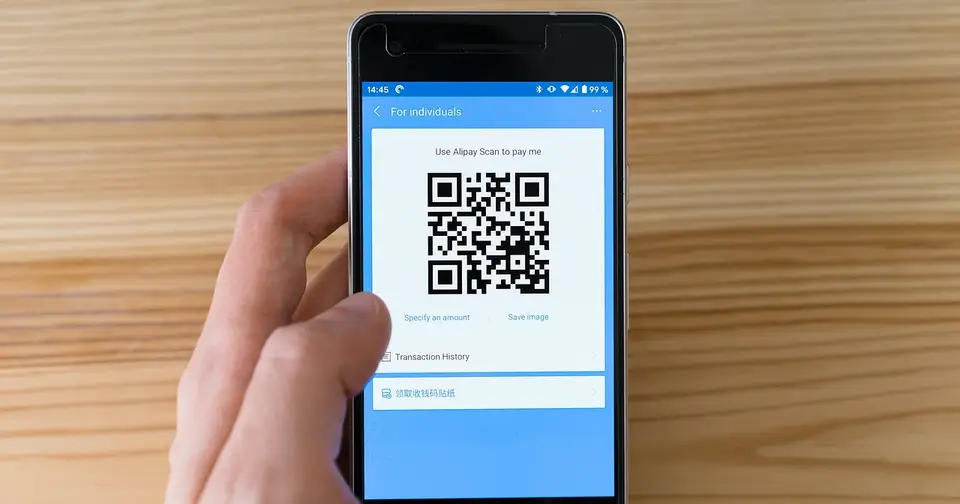
Alipay Korea Add Card: How Visitors Link a Foreign Card and Pay in Korea (2026)
How do you add a card to Alipay for a trip to Korea?
Short answer: install the international Alipay app, sign up, open the bank card screen, add your Visa or Mastercard, finish the bank’s verification prompt, and make a small test payment before you fly. As of 2026-11-27 that sequence is what government guides and travel sites describe, but I have not run it myself, and screen names change.
Here is the sequence in order.
- Install the international version of the Alipay app from your official app store.
- Sign up with your phone number. Beijing’s government guide says a foreign or a Chinese number works.
- Open the bank cards (or wallet) section and choose to add a card.
- Enter the card number, expiry date, your name as it appears on the card, and a billing address if asked.
- Approve the 3-D Secure message your bank sends by text or in its app.
- Set a payment password, then check that a payment code (barcode and QR) appears.
- Make one small purchase before the trip, not at the airport.
If you are a resident of Korea who just wants to know how Korean wallets work, skip ahead. Most of this post is for visitors, and for people who got stuck at step 5.
Does Alipay actually work at shops in Korea?
It works at a lot of them, but not all. Alipay+ is the cross-border network behind it, and the company’s own announcement in December 2025 said QR payments in Korea rose 18 percent and covered about 2 million merchants, mostly small businesses (Business Wire release). A press release is a company claim, not an audit.
What the coverage reports, in plain terms:
- Mainland Chinese Alipay users are the largest group in Korea, followed by AlipayHK users.
- Payment at many shops runs through a shared QR standard (ZeroPay) at the register.
- Local bus and taxi networks have partnered in some areas, though details vary.
- Some cities run local promotions, for example Suwon’s 2026 to 2027 scheme in districts visited by foreigners, as reported by Asia Economy.
What I could not confirm is whether a US, UK or European Alipay account with a linked foreign card pays in Korea the same way a mainland account does. The sources describe Alipay+ as a network of partner wallets, so the answer depends on your wallet. Treat that as an open question and test it.
Which cards can you link, and will yours work?
Brand lists differ by source, which is exactly why I would not promise anything for a specific card.
| Source | Brands listed |
|---|---|
| Shanghai government English FAQ | Visa, Mastercard, Diners Club, Discover (card must be issued outside the mainland) |
| Beijing government expat guide | Visa, Mastercard, UnionPay, American Express, JCB, Diners Club, Discover |
| Alipay HK FAQ (a separate product) | Visa and Mastercard only, as reported |
Two of those are government pages and they still disagree, which tells you the list moves. The Beijing page also notes that brand scope, limits and charges vary by Alipay product and points readers to the in-app prompts and the service agreement. American Express gets a mention in some guides as having lower limits and thinner acceptance.
I found no official page that says a particular bank’s card works or fails. So the real test is yours: add the card, then pay a few dollars somewhere.
Why does linking or paying fail?
Most failures come from the bank side, not Alipay. One travel guide lists the usual suspects: the 3-D Secure step was not completed, the bank’s fraud alert asked for approval that nobody gave, online or international payments were switched off, some QR codes do not accept foreign cards, the screen would not load, or Alipay’s own identity and security review kicked in.
A short checklist, in the order I would try things:
- Open your banking app and allow international and online payments
- Check that you can receive text codes abroad
- Look for a fraud-alert notification and approve it
- Make sure name and address match the card exactly
- Update the Alipay app and retry on stable data or Wi-Fi
- Call the bank and ask it to allow the attempt
Here is a made-up example, flagged as one: a traveler lands in Seoul, tries to link a card on airport Wi-Fi, and never gets the text because roaming is off. She buys an eSIM, the code arrives, and linking works. The lesson is boring and useful: sort out how you will receive codes before you travel. For that, see Korea eSIM and prepaid SIM options.
What does it cost to pay with a foreign card?
Two layers can charge you, and I could not verify either on an official page.
| Layer | What is reported | How to check |
|---|---|---|
| Alipay platform | One guide says foreign-card payments of 200 yuan or less are generally free of a platform fee, with 3 percent possible above that | The fee shown on the payment screen |
| Your bank | Foreign transaction fees and exchange rates vary by issuer | Your card’s fee schedule |
| Currency | The rate at purchase and at posting can differ | Your statement |
| Prepaid products | Top-up services have their own fee structures | The product’s terms |
Do not trust a post that says “no fees” or “always 3 percent” without a date. The screen in front of you at checkout is the only number that counts. For ways to keep foreign fees down in general, Best Credit Cards in Korea 2026 and Korea Golden Week: overseas card vs exchange are good starting points, and travel currency exchange tips covers the cash side.
What should you carry besides Alipay?
Everything. A payment app is one tool, and a tool that depends on your phone battery, your signal and a bank’s mood is a poor single point of failure.
Pack this:
- A physical Visa or Mastercard with a working chip
- A second card from a different bank
- Some Korean won in cash
- A power bank
- Your bank’s emergency number, saved where you can reach it offline
For the other side of Korean payments, read Mobile Payment and Transit Card Guide and Apple Pay in Korea.
How do you avoid Alipay-themed scams?
Korea’s financial regulator has repeatedly warned about texts claiming an overseas payment was approved, urging you to call a number or install an app. After a China data-leak story in 2025, Korean reports warned about scam texts using Alipay payment and data-leak wording. A July 2026 consumer alert described fake checkout pages that harvested card numbers and full national ID numbers. I could not open the regulator’s own page, so these come from news summaries; check its official site for the current text.
The rules are short.
- Do not tap links in unexpected payment texts.
- Install only from the official app store.
- A checkout page asking for your full national ID number or card PIN is a red flag.
- If you typed data in, call the card issuer, freeze the card and ask for a replacement.
What if you live in Korea and plan to use Alipay in China?
Residents are the other group searching this phrase. If you hold a Korean-issued Visa or Mastercard and are headed to mainland China, the steps above are the same ones, and the card is simply a foreign card from Alipay’s point of view. The Shanghai government FAQ says the latest update removed the need for a prepaid account or a Chinese phone number for cards issued outside the mainland. That is a big change from older advice you may still find on forums, where people describe topping up a balance first or being stuck without a Chinese bank account.
Older and newer advice conflict a lot on this topic. Some forum posts say offline payments with a foreign card failed, while newer guides describe direct card linking working at shops. One 2026 guide describes a move away from the older prepaid “Tour Pass” mini-app toward linking foreign cards directly, though it does not say the older route has been formally shut. Because I cannot see what your account will allow, the answer is the same as before: link, test, and carry a backup.
A few habits help residents in particular:
- Link the card at home, on your own stable connection, at least three or four days before departure, because identity checks can take hours.
- Use the same spelling of your name on the card, the app and your passport.
- Keep your Korean number active, or arrange another way to receive bank texts while you are away.
- Tell your bank you are traveling, if it asks for that, so a first payment in a new country is less likely to be flagged.
For wider trip prep, a packing checklist and travel insurance are worth a look.
What are the most common mistakes people make?
After reading the guides and the complaint threads, the same handful of mistakes keep coming up. None of them is exotic.
| Mistake | Why it hurts | Fix |
|---|---|---|
| Linking the card the night before a flight | Verification can take hours, and a bank flag may need a phone call | Do it several days ahead |
| Relying on one card | A fraud block or lost wallet leaves you with nothing | Carry two cards from different banks |
| Assuming “Visa” means “works everywhere” | Acceptance depends on the product and the shop, not only the logo | Test with a small payment |
| Ignoring the bank’s approval prompt | The payment fails without any clear message on the Alipay side | Watch for the bank’s notification |
| Tapping a link in a payment text | Scam texts imitate payment confirmations | Open the app yourself |
| Trusting a single blog’s fee number | Fees and promotions change | Read the payment screen |
The third row deserves a second look. Brand logos tell you which network a card runs on. They do not tell you whether a given shop’s terminal, or a given wallet’s rules, will accept it today.
How should you test before you rely on it?
A five-minute test beats an hour of forum reading. Pick something cheap where failure costs nothing: a bottle of water at a convenience store, a coffee, a small transit fare where Alipay is shown as accepted.
- Open the payment code screen and confirm the code refreshes.
- At the register, say you want to pay with Alipay and wait for the cashier to scan or to show you their QR.
- Look at the amount, the currency and any fee line before you confirm.
- Check your bank app for the charge, including its amount in your home currency.
- If anything goes wrong, take a screenshot of the error. It helps when you call your bank.
If the test fails once, do not panic. Try a second shop. If it fails twice with the same message, go back to the checklist above and call the bank. Payment apps sometimes work at one chain and not another because of how each store’s terminal is set up.
Should visitors use Alipay or a Korean option instead?
For many visitors, a plain physical card plus a transit card is simpler and works almost everywhere, while Alipay is a bonus for the shops that display its sign. Korean wallets and local cards are built for Korean accounts, and visitors often cannot register them without a local bank account or a resident ID, so Alipay and a foreign card can fill the gap. If you want the transit side sorted, read the Korea T-money card guide for tourists next to this one.
The practical split I would use: Alipay for shops that show the sign, a physical card for everything else, T-money for buses and subways, and a little cash for markets and small stalls. I have not used Alipay in Korea myself, so treat that as a sensible plan based on how the sources describe the system, not a field report.
Final check before you fly
- App installed and card linked
- Payment code displays
- One small test payment done
- Bank allows international and online payments
- Way to receive text codes set up
- Backup card and cash packed
- You know how to report a scam text
This guide is general information as of 2026-11-27, based on government guides, a company press release and search results. Alipay menus, supported brands, limits and fees change often, and I have not used the app to verify each step. It does not promise that any specific card will work, and it is not financial advice. The traveler example is hypothetical.
How do I add a card to Alipay for use in Korea?
Install the international Alipay app, sign up with your phone number, open the bank cards section, and add a Visa, Mastercard or other supported card. Complete any 3-D Secure prompt from your bank, then check that a payment code appears. Menu names change between app versions, so follow what your own app shows.
Can I pay with Alipay in Korea?
Alipay+ says it covers roughly 2 million merchants in Korea, mostly small and medium businesses, and that QR payments there grew in 2025. That is a company figure, and not every shop takes it. Look for an Alipay sign at the register and ask before ordering.
Does a US or European Alipay account work in Korea the same way as a mainland China account?
I could not confirm that. Reports describe Alipay+ as a network of partner wallets, led by mainland Alipay and AlipayHK users in Korea. Whether your particular account and linked foreign card can pay at a Korean shop is something to test with a small purchase.
Which card brands can I link to Alipay?
Government guides from Shanghai and Beijing list Visa, Mastercard, Diners Club and Discover, and the Beijing one adds UnionPay, American Express and JCB. The lists differ, so the card-adding screen in your own app is the final word.
Why does my foreign card fail to link or pay?
Common causes are a missed 3-D Secure confirmation, a bank that flags the attempt as unusual and waits for your approval, online or international payments turned off, or Alipay's own identity checks. Call the number on the back of your card and ask your bank to allow the attempt.
Are there fees for paying with a foreign card on Alipay?
One travel guide says foreign-card payments under 200 yuan are generally free of a platform fee, and above that a 3 percent fee may apply. I could not verify that on an official page. Your own bank may add a foreign transaction fee and its own exchange rate.
Do I need a Korean phone number to use Alipay in Korea?
Shanghai's government FAQ says the latest update removed the need for a Chinese phone number or a prepaid account for foreign cards. It does not mention a Korean number. You do need a way to receive text codes, so check roaming or an eSIM before you land.
Is it safer to use Alipay or a card in Korea?
Neither is risk-free. A wallet that tokenizes your card keeps the number off the shop's screen, but scam texts and fake checkout pages are the bigger practical risk. Install only from the official app store and never enter your PIN or full ID number on a payment page.
What should I carry as a backup in Korea?
A physical Visa or Mastercard with a working chip, a second card from a different bank, and a small amount of cash. Korean convenience stores, subways and taxis mostly take cards, but terminals vary, and a wallet app failing at a counter is a bad time to find that out.
I live in Korea. Do I need Alipay at all?
Probably not for daily life. Korean wallets and cards cover almost everything for residents. Alipay matters if you travel to mainland China, or if you host visitors who pay that way.
관련 글
Samsung Pay Transit Card in Korea: Add T-money to Your Galaxy or Skip It (2026)

How to Use Google Gemini for Beginners: Setup, Files, Privacy, and 5 Prompts (2026)

How to Use Claude AI for Beginners: Sign-Up to Your First 5 Prompts (2026)

Computer Running Slow? 10 Fixes That Work (Windows & Mac)

GPT-5 vs Claude 4.6: Which AI Should You Actually Use in 2026?