eSIM and Prepaid SIM for Tourists in Korea: What to Buy and Where (2026)
The best eSIM and prepaid SIM for tourists in Korea is a data-only eSIM if you only need maps and messaging, and a carrier prepaid SIM or eSIM with voice if you need a Korean 010 number. Both come from SK Telecom, KT, LG U+ or an eSIM app, and as of November 2026 a week of unlimited data is roughly the price of two lunches in Seoul.
This is a US-reader guide to a very specific problem: you land at Incheon after a long flight, you want maps working before you reach the train platform, and you do not want to find out at the counter that your phone is locked. I have not bought these products myself, so everything below comes from carrier pages, airport information and travel-guide reports I could find. Where sources disagree, I say so.
What is the best eSIM and prepaid SIM for tourists in Korea?
There are three realistic products, and they solve different problems.
| Option | Typical cost (as of Nov 2026, hedged) | Korean number | Best for |
|---|---|---|---|
| Data-only eSIM app | From about US$3-4 for small packs; roughly US$12 (3 days) to US$69 (30 days) for unlimited-style plans | No | Short trips, maps, messaging, no hassle |
| Carrier tourist eSIM with voice and SMS | About 18,000 won (3 days) to 77,000 won (30 days) in third-party price lists | Yes, after passport check | Longer stays, SMS codes, restaurant and taxi apps |
| Airport counter physical SIM | About 18,000 won (3 days) to 71,500 won (30 days); other guides quote lower ranges | Yes, with the voice version | Phones without eSIM, travelers who want a human to set it up |
My read: the decision is almost never about price, it is about whether you need a Korean number. If you do not, take the data-only eSIM and be done before you board. If you do, plan the passport step.
Price sources disagree. One guide that reads like a carrier ladder lists 18,000 won for 3 days, 35,000 won for 7 and 71,500 won for 30, with a one-day data-only plan near 6,500 won. Another guide cites 15,000 to 30,000 won for a week or a month of unlimited data at the airport. SK Telecom’s own roaming reservation page, skroaming.com, lists voice-and-data plans at 18,000 won for 3 days, 27,500 won for 5 days and 38,500 won for 10 days. Use those numbers as a range, not a quote.
Where can tourists buy a SIM card or eSIM in Korea?
You can buy online before departure, at a roaming center in the arrivals hall, and the first two cover almost every tourist.
At Incheon, KT, SK Telecom and LG U+ each run counters in the arrivals areas of Terminal 1 and Terminal 2. Opening hours are the thing guides disagree on: some say certain desks are open around the clock, others list roughly 06:00 or 07:00 to 22:00. The airport operator’s own site, airport.kr, is the place to check facility hours for your arrival terminal. KT publishes its overseas-visitor products at roaming.kt.com.
Online is cheaper and calmer. A carrier eSIM or an eSIM app is bought and installed on home Wi-Fi, and you switch it on at the airport. The catch is that voice versions are not sold the same way everywhere. Guides report that SK Telecom sells its voice eSIM online with passport verification afterward, while KT and LG U+ tend to sell data versions online and complete the voice version at an airport counter. Verify the rule for the carrier you pick.
Do Gimpo, Busan and the city sell tourist SIMs too?
Yes, mainly at the smaller airport counters (Gimpo and Gimhae are named in guides) and through rental and reseller shops in tourist districts. Treat those as backups. A city shop is a fine plan B if your phone fails to register, but you will be shopping on a weak connection with a language barrier.
What is the difference between a data-only eSIM and one with voice?
A data-only eSIM gives you internet and nothing else: no phone number, no incoming calls, no SMS. A voice eSIM or SIM gives you a Korean 010 number and usually data, and it is the only kind that can receive a text.
For most tourists, data-only is enough. KakaoTalk, WhatsApp, FaceTime audio and Google Meet run on data, so you can call a hotel or a friend without a number. Taxi apps that use a foreign phone number for contact also work for many visitors.
The number matters when an app insists on a Korean SMS code. Reports are mixed here. Some delivery apps want a Korean number tied to a resident card. Some restaurant booking and taxi apps accept a tourist voice SIM. Bank and government verification will not work on any tourist line, because carriers state that tourist plans do not support personal authentication. That includes tourist eSIMs from SK Telecom, which say so in their own terms.
| Need | Data-only eSIM | Voice SIM or eSIM |
|---|---|---|
| Maps, translation, social apps | Works | Works |
| Calls to a Korean restaurant | Via app only | Works |
| SMS code from a Korean app | Fails | Often works |
| Bank, government, identity checks | Fails | Still fails |
| Hotspot for a laptop | Check plan terms | Check plan terms |
Does my phone work with a Korean eSIM, and what about roaming?
Your phone needs two things: eSIM hardware and a carrier unlock. Without both, a Korean eSIM will not install.
Guides generally say iPhones from the XS and XR (2018) onward support eSIM, with exceptions such as some China-market models. Pixel 4 and later, and Samsung Galaxy S20 and later, generally support it, but regional versions differ and some US-bought Samsung units have had eSIM disabled. Google’s help page for using an eSIM on Pixel is a stable reference; for iPhone, search Apple support for your model. If your phone came from a carrier plan, ask that carrier whether it is unlocked. A phone still on installment payments is often locked.
Is an eSIM better than international roaming?
For a trip of more than two or three days, usually yes. Daily roaming passes from US carriers are convenient and keep your own number, but they cost several times more per day than a Korean tourist plan. Roaming wins when your carrier includes it free in your plan, when you land after hours, or when you want to keep a number for two-factor codes sent to your US phone.
A practical hybrid is common: keep your home SIM active for texts from your bank and install the Korean eSIM as the data line. Dual-SIM phones handle this without a restart.
What happens with unlimited plans?
Read the daily cap. One travel-eSIM provider describes its unlimited plans as giving around 3GB per day at full speed and slowing afterward until the next day. Hotspot use may also be throttled on some plans. This is normal marketing, not a scam, but it is worth knowing before you plan to tether a laptop.
How do passport checks work when I buy a SIM in Korea?
For a physical SIM or a voice eSIM, the carrier needs to match the line to a real traveler. At the counter, you show your passport and the staff enter the details. Online, the seller asks for your name and passport number, and some carriers ask you to complete verification in a web or app step after you land.
SK Telecom’s reservation terms, as summarized in search results, say the plan is for foreigners, that passport verification is needed for calls and texts, and that Korean passports cannot be verified through that product. Reports also say that incoming calls and texts work without a top-up while outgoing ones need prepaid credit. Because the details are not consistent across resellers, always read the rules on the carrier’s own page rather than a reseller listing.
Keep your passport with you during activation, not packed in a checked bag. It is the single most common reason a voice SIM stays dead on arrival.
Can a tourist SIM be used for payments or identity checks?
No. Tourist lines are positioned as connectivity products. If you need Korean banking, pass-style authentication or a resident-registration-linked app, you are in resident territory, not tourist territory. For that path, see my foreigner bank account guide and my Korean budget phone plans guide, which covers longer-term plans for people who hold an Alien Registration Card.
What goes wrong for first-time visitors? A composite example
This is a composite built from the failure patterns that show up repeatedly in traveler reports, not one person’s story.
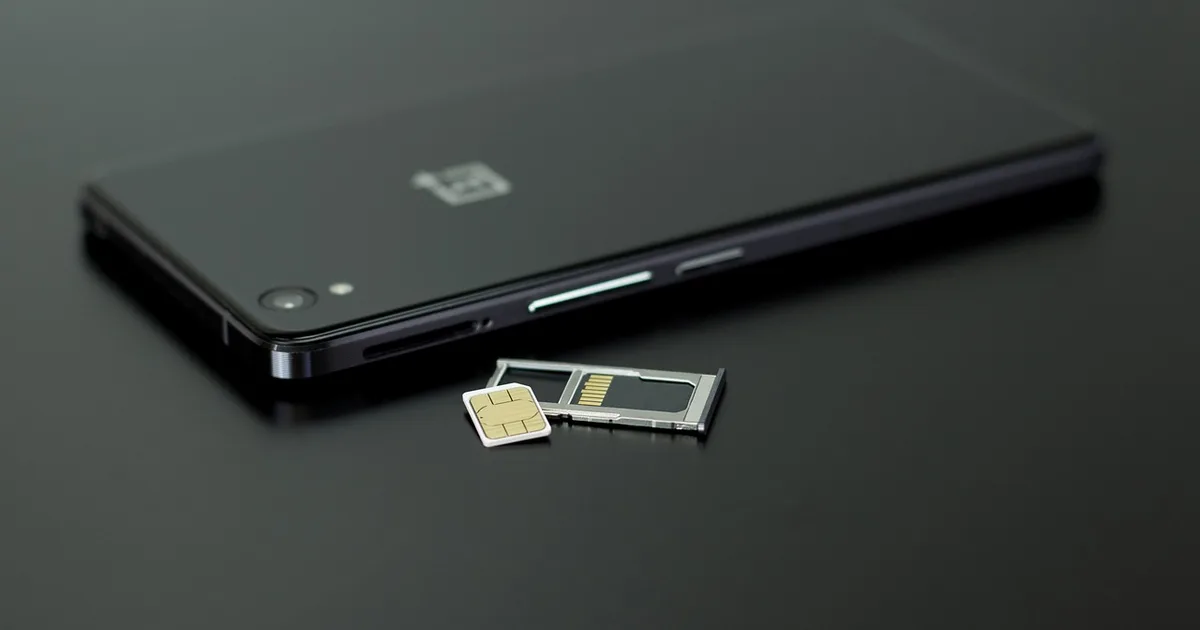
A traveler buys a cheap eSIM listing the night before a flight and scans the QR code in the terminal. Nothing happens. Two problems are stacked: the phone was bought on a carrier installment plan and is still locked, and the listing started its validity clock the moment the QR code was installed, so a day of the plan is already used up before landing. At the arrivals hall, the traveler walks to a counter, finds the line long, buys a physical SIM, and then learns the phone has no free SIM tray slot because the home SIM is behind a stuck adhesive case.
None of this is unusual. The fixes are boring and cheap. Check the unlock before you pay. Install the eSIM profile but leave it off until you land, if the seller allows it. Know where your SIM eject tool is. And keep your home SIM active so you can still get a text from your bank when a card is declined.
How do I avoid SIM scams and overpaying?
Most SIM problems are mistakes rather than fraud, but a few patterns are worth a quick check.
- Compare the price to the carrier’s published ladder. If a listing is far below it with no stated data cap, find out what you are not getting.
- Buy from a carrier counter, a carrier site or a well-known eSIM app. Avoid street sellers.
- Check the activation rule. Some plans start the clock on purchase, some on first connection to a Korean network.
- Check that the listing says whether it includes voice, SMS and hotspot. Resellers often leave this out.
- Do not share more than the passport details needed. A legitimate seller needs the name and passport number for a voice line, not your card PIN.
If a plan stops working, contact the seller first, then the carrier. A support chat in English is more likely at the carrier counter than on the street.
How does this fit with the rest of a Korea trip?
Connectivity is one piece of a short checklist. On arrival day you typically need a data connection, a transit card and some cash or a foreign-fee-free card, in that order. I cover the transit card in my T-money card guide for tourists and money options in my travel currency exchange tips. If you are still choosing a handset for the trip, my smartphone buying guide explains the SIM and eSIM trade-offs on new phones, and the travel insurance comparison is worth reading if your phone is the most expensive thing in your bag.
For official visitor information, the Korea Tourism Organization runs english.visitkorea.or.kr, which is the place to check for current visitor services. I could not open it during research, so I am pointing to it as the place to verify, not citing a figure from it.
What should I check before I buy?
Rules and prices move, and the sources here are mostly resellers and travel guides, with carrier pages visible only through search summaries. Before you pay, run through this list.
- Is my phone carrier-unlocked, and does it list an Add eSIM option in settings?
- Do I need a Korean number, or will data and app calling do?
- When does the validity clock start, and can I install the profile now and activate later?
- What is the daily data cap, and is hotspot allowed?
- Where will I collect or verify it, and are the counter hours compatible with my flight?
If you can answer all five, you are ahead of most arrivals.
This article is general travel information, not financial or legal advice. Carrier plans, prices, passport rules and app requirements change often and were reported by third-party sources as of November 2026. Confirm current terms on the carrier’s official page before buying.
What is the best eSIM and prepaid SIM for tourists in Korea?
If your phone is unlocked and supports eSIM, a data-only eSIM bought before you fly is the simplest and usually cheapest choice. If you need a Korean 010 number for texts or restaurant and taxi apps, a carrier prepaid SIM or eSIM with voice and SMS from SK Telecom, KT or LG U+ is the better fit. Prices change, so check the carrier page on the day you buy.
Is an eSIM cheaper than an airport SIM card in Korea?
Usually yes. Third-party guides in late 2026 put carrier tourist plans around 18,000 won for 3 days and roughly 71,500 won for 30 days, with the airport counter at or above the online price, while data-only eSIM apps often start from a few US dollars for small data packs. Exact prices vary by seller and date.
Do I need my passport to buy a SIM card in Korea?
For a physical SIM or a voice eSIM with a phone number, yes. Korean carriers verify a foreign passport before activating calls and texts. A data-only eSIM from an app usually needs no passport check because it has no Korean number.
Can I use a data-only eSIM for KakaoTalk and Naver Map?
Yes for the apps themselves. KakaoTalk, Naver Map, Kakao Map and Google Translate work over any data connection. What does not work is anything that needs an SMS code sent to a Korean number, such as some delivery and shopping apps.
Will my phone work with a Korean eSIM?
Only if it is carrier-unlocked and has eSIM hardware. iPhones from the XS and XR (2018) onward, Pixel 4 and later, and Samsung Galaxy S20 and later generally support eSIM, but some regional versions do not. Check your phone settings for an Add eSIM option and confirm the unlock with your home carrier.
Is eSIM better than international roaming in Korea?
For anything beyond a couple of days, usually yes. Home-carrier day passes are convenient but often cost several times more per day than a Korean tourist plan. Roaming wins only when you want zero setup and your carrier's daily cap is generous.
Can a tourist SIM be used for Korean banking or government apps?
No. Carriers describe tourist plans as unable to support personal identity verification, so bank, government and pass-style authentication will not work. Treat a tourist SIM as a connectivity tool, not as proof of identity.
Where are the SIM counters at Incheon Airport?
KT, SK Telecom and LG U+ run roaming centers in the arrivals areas of both Terminal 1 and Terminal 2. Opening hours differ by desk and by source, so confirm before you rely on a late-night arrival.
How do I avoid SIM card scams in Korea?
Buy from a carrier counter, a carrier's own site, or a well-known eSIM app, and compare the price against the carrier's published ladder first. Be wary of street sellers, unusually cheap listings with no stated data cap, and any seller who asks for more than the passport details needed for activation.
Does the eSIM expire if I do not use all the days?
Tourist plans run on a fixed clock that usually starts when you first connect to a Korean network or when you activate, depending on the seller. Read the activation rule before buying so you do not burn a day while still at home.