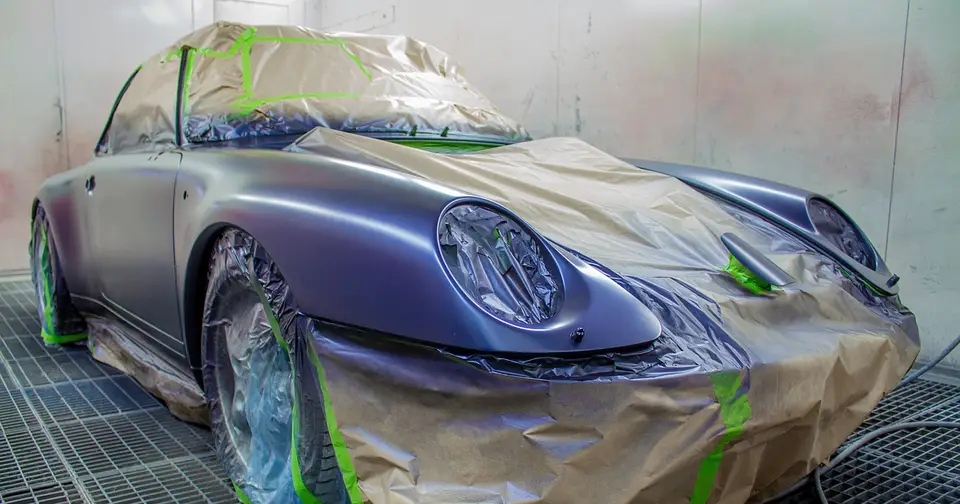
Auto Body Shop Insurance Cost 2026: Collision Repair Coverage, Paint Booth Risk, and Realistic Premium Ranges
How much does auto body shop insurance cost in 2026?
Auto body shop insurance cost is driven mostly by payroll, the value of customer vehicles on your lot, and how much you paint, and for a small shop it commonly lands in the low-to-mid five figures a year once workers comp is included. Those numbers are hedged planning figures, not quotes.
Here is why a collision shop prices differently from a general mechanic. You take in damaged cars worth tens of thousands of dollars, keep them for days or weeks, and run open flame risk, solvents, and spray equipment in the same building. Then you hand the car back and the customer drives it at highway speed on the strength of your structural and safety-system work.
That combination means four separate exposures: the cars you hold, the people you employ, the building and paint operation, and the repair itself. Each one has its own coverage. Each one has its own rating logic. And each can hurt you badly if it is left out.
A rough way to think about the order of magnitude, with all the usual caveats about state and carrier differences:
| Shop profile (illustrative) | Typical annual driver | Hedged planning range, all lines combined |
|---|---|---|
| Owner-operator plus 1-2 techs | Small payroll, few cars on site | Low five figures at the high end; often less |
| 5-10 employees, one booth | Painter payroll, 10-25 cars on site | Mid five figures is common |
| 15+ employees, multiple painters, frame bay | Payroll and car values both large | Can exceed that comfortably |
Those bands overlap on purpose. Two shops of the same size in different states can differ by a factor of two, and workers comp alone often accounts for the largest share. If you want a deeper line-by-line read of the sister coverages, the auto repair shop insurance cost guide covers the mechanical-repair side of the same family.
What coverages does a collision repair shop actually need?
A collision repair shop needs garage liability, garagekeepers, property coverage that names the paint booth, workers comp, and usually a professional or faulty-work layer. Commercial auto is added if you tow or deliver.
Think of it as a stack rather than one policy:
| Coverage | What it protects | Body shop twist |
|---|---|---|
| Garage liability | Injury or damage you cause to others | Covers operations and premises; read the products-completed-operations section |
| Garagekeepers | Customer cars in your custody | Limit should reflect the most cars you could lose at once |
| Commercial property | Building, booth, contents | Booth, mixing room, and stored solvents must be listed |
| Workers comp | Employee injury and illness | Painters and prep techs sit in higher-rated classes |
| Commercial auto | Tow trucks, loaners, delivery | Separate from garage policy if you tow |
| E&O or faulty-work cover | Claims from a bad repair | Frame, airbag, and ADAS calibration are the hot spots |
| Pollution endorsement | Solvent and overspray cleanup | Often excluded by default |
| Equipment and tools | Frame machine, scanners, welders | Usually inland marine, scheduled |
The distinction between the first two trips up more owners than anything else. The garage liability guide explains the third-party side, and the garagekeepers guide explains the custody side. If you read only one, read the garagekeepers one, because that is the coverage a body shop leans on hardest.
What does garagekeepers cover for cars waiting on parts?
Garagekeepers covers a customer’s vehicle while it is in your care, custody, or control, whether it was damaged by fire, theft, vandalism, or your own employee. For a body shop, that includes cars sitting outside waiting on parts and approvals.
Collision work has a built-in storage problem. Insurers approve supplements slowly, parts back-order, and a car you thought would leave in a week can sit for a month. Every day it sits, it is exposed on your lot.
Two choices matter most:
- Primary or excess. Some garagekeepers forms pay only after the customer’s own collision coverage responds. Others pay first. If your customers are mostly insured drivers on DRP jobs, the difference shows up in who pays the deductible and who fights the subrogation.
- Limit and deductible per location. Add up the most cars you can plausibly have on the property at once, using a realistic average value, and compare that to the limit. A shop with 25 cars averaging $30,000 has far more on site than the policy limit many owners remember buying.
A concrete failure case, labeled as a composite rather than a real claim: a shop stores twelve customer cars in a fenced rear lot. A fire starts in a neighboring building and reaches the lot. The shop’s property policy covers its own building and equipment, but the customer cars were never scheduled anywhere. Because garagekeepers was skipped to save a few thousand dollars, the owner faces twelve vehicle claims out of pocket. That scenario is why this coverage sits at the top of any sensible checklist.
How do paint booth fires and solvents change your coverage?
A paint booth adds fire, explosion, and environmental exposure, so carriers underwrite it separately and may ask for proof of maintenance, filter schedules, and suppression systems. Pollution from solvents is often excluded unless you add an endorsement.
Two regulatory facts shape this. OSHA’s spray finishing standard, 29 CFR 1910.107, governs how flammable and combustible liquids are sprayed in booths and spray areas, and shops are expected to follow its ventilation and fire-protection requirements. Separately, the EPA’s paint stripping and miscellaneous surface coating rule, 40 CFR Part 63 Subpart HHHHHH (often called the 6H rule), applies to shops that spray coatings on motor vehicles, with notification and work-practice duties. Check the current text, since the EPA amended the rule in 2022.
Why insurance people care: a booth that is out of compliance is both more likely to burn and easier for a carrier to blame after a loss. Underwriters often ask about:
- Booth type and age, and whether it is regularly serviced.
- Filter change logs and cleaning of the exhaust path.
- Fire suppression and alarm monitoring.
- Solvent and paint storage, including the mixing room and waste handling.
- Whether employees are trained and whether you keep records.
Pollution is the quiet gap. A general liability policy usually excludes pollution, and a solvent spill or overspray drift claim can fall right into it. Ask for a pollution endorsement or a small stand-alone policy, and see the commercial property cost guide for how the building side is priced.
What does workers comp cost for painters and estimators?
Workers comp is priced per $100 of payroll by job classification, and painters and body technicians carry much higher rates than estimators or office staff. For many shops it becomes the single largest line.
The mechanics are simple and unforgiving. Your carrier assigns each employee to a class code, multiplies payroll by that class’s rate, and adjusts it with your experience modification. At the end of the year an audit compares what you estimated to what you paid.
Practical points for a body shop:
- Split payroll honestly. Estimators, office staff, and managers can often sit in a lower-rated class, but only if their duties really are clerical. Putting a working painter in the office class invites an audit surprise.
- Texas is the exception. Private employers there may opt out, but the Texas Department of Insurance explains that non-subscribers have notice and filing duties and can lose defenses in an injury lawsuit. For a shop with isocyanate exposure and heavy equipment, that is a real gamble.
- Safety history matters. Your experience mod can lift or lower the premium for years, so a lost-time injury has a long tail.
For the deeper class-code mechanics, the workers comp cost guide walks through payroll, mods, and audits.
What happens when a repair goes wrong? E&O and faulty workmanship
A bad repair becomes a claim when the vehicle later fails: a frame that does not hold, an airbag that does not deploy, or a camera or radar system that is mis-calibrated. Whether your policy answers depends on how it treats completed work and professional services.
Modern collision repair is no longer only metal and paint. Cars now carry cameras, radar, and sensors that must be recalibrated after glass, bumper, or structural work, and the repair procedures come from the manufacturer. If a sensor is left misaligned and the car later fails to brake automatically, the customer’s injury lawyer will start with your invoice.
What to check:
- Products-completed-operations. This part of garage liability can respond to injury after the work is done, but some policies exclude structural and safety-system repairs or cap them.
- Professional liability or E&O. Stand-alone coverage for errors in service can fill the gap, and some carriers offer a faulty-workmanship endorsement.
- Documentation. Pre-scan and post-scan reports, calibration printouts, and photographs of the work are the evidence that wins or loses these claims. Keep them with the repair order.
Another composite example, to illustrate rather than report: a shop replaces a bumper cover and skips a required radar calibration. Months later the customer rear-ends a vehicle, claiming the adaptive cruise failed. Even if the shop did nothing wrong, defending the suit costs real money, and the question of whether the policy responds is decided by the exclusion language, not by fairness.
What do insurers require in a direct repair program (DRP)?
DRP contracts typically set the pricing, cycle time, and quality terms for repairing an insurer’s policyholders, and they often attach insurance requirements such as minimum limits, proof of garagekeepers, and additional-insured status.
You do not need to memorize any one insurer’s contract, because they differ. You do need to read the insurance clause before signing. Typical items:
| DRP contract item | What to confirm with your agent |
|---|---|
| Minimum liability limits | Does your current limit meet it, and is an umbrella needed? |
| Garagekeepers requirement | Primary or excess, and the per-location limit |
| Additional insured / certificate | Can your carrier issue it without an extra charge? |
| Waiver of subrogation | Is it endorsed on your policy? |
| Certifications | Do I-CAR or OEM certifications affect your pricing or carrier appetite? |
Training programs such as I-CAR are valued by many carriers and manufacturers, and they can support the argument that your technicians are qualified. Do not assume a certification lowers your premium automatically; ask the underwriter what credit, if any, you will receive.
Also watch concentration. If most of your revenue is two DRP relationships, your business is exposed to a contract loss even when your insurance is perfect. That is a business risk, not an insurable one, but it is worth knowing before you set limits.
How do commercial auto and towing fit in?
If you tow, deliver, or pick up vehicles with company trucks, you need commercial auto or a garage policy with the right auto symbols. A garage liability policy does not automatically cover every vehicle you drive.
Many body shops started by adding a flatbed to serve customers directly. That addition changes the risk profile, because a tow truck on public roads is a different exposure than a car parked in your yard.
Points to check with your agent:
- Owned, hired, and non-owned autos. Employees running errands in personal cars can create exposure to you.
- On-hook coverage. Covers a customer’s vehicle while it is hooked up and in transit, which garagekeepers may not.
- Driver screening. Underwriters will ask for driving records, and a poor record can shift pricing sharply.
The towing company insurance guide goes through on-hook coverage, and the commercial auto cost guide covers the fleet side. If towing is a minor service, ask whether a package works better than a separate policy.
How do you shop for the policy, and which mistakes cost the most?
Shop through an independent agent who writes garage risks, give every carrier the same accurate numbers, and compare coverage forms line by line rather than total premium alone. A cheaper quote with a pollution exclusion or a low garagekeepers limit is not actually cheaper.
What rating factors move your premium?
Carriers price a body shop on payroll, the value and number of vehicles on site, paint volume, location, safety controls, and your claims history. These are the same levers an underwriter will ask about in the application.
| Factor | Why it matters | What you can control |
|---|---|---|
| Payroll by class | Drives workers comp | Accurate classification, safety program |
| Vehicle values on site | Drives garagekeepers | Turn cars faster, limit outdoor storage |
| Paint volume and booth type | Drives fire and pollution rating | Maintenance logs, suppression upgrades |
| Location | Theft, weather, and litigation climate | Fencing, cameras, lighting |
| Claims history | Signals future losses | Loss control, prompt reporting |
| Services (towing, EV, frame) | Adds exposure classes | Tell the carrier honestly |
Honest disclosure is the lever many owners overlook. An undisclosed booth or an undisclosed pile of EV battery work does not make the risk disappear; it makes a claim denial more likely.
A simple process:
- Gather payroll by job class, revenue, number of cars typically on site, average value, booth details, and five years of loss runs.
- Ask for quotes with identical limits so the comparison is fair.
- Read exclusions for pollution, structural repair, and calibration.
- Confirm the DRP insurance clause is satisfied before you sign.
- Set a calendar reminder for 90 days before renewal, and re-quote every year.
The mistakes that show up again and again:
- Skipping garagekeepers or buying a limit far below the cars on site.
- Assuming general liability covers customer vehicles.
- Misclassifying painters as clerical staff to cut workers comp.
- Not disclosing the paint booth, EV work, or towing.
- Buying the minimum limits a DRP demands and nothing more, then facing a claim that exceeds them.
A final practical point. If your premium seems high, do not respond by cutting the limit that protects you from a catastrophic event. Raise deductibles on smaller losses, improve controls, and shop the account instead. A small shop with a well-run booth, clean loss runs, and good documentation can win real pricing leverage.
This article is general information, not insurance or legal advice. Premium ranges are hedged planning figures as of November 2026 and vary widely by state, carrier, and shop. Rules and regulations change; confirm current requirements on the linked official pages and with a licensed insurance agent before buying a policy.
How much does auto body shop insurance cost?
There is no single price. As a hedged planning range for 2026, a small shop with a handful of employees often sees a combined package in the low-to-mid five figures per year once workers comp and garagekeepers are included, while a larger multi-painter operation can run well above that. Payroll, the value of customer cars on site, paint volume, state, and claims history move the number more than anything else. Treat any range as a starting point for quotes, not a promise.
What insurance does a collision repair shop need?
At minimum: garage liability, garagekeepers (for customer vehicles in your care), commercial property that addresses the building and paint booth, workers comp for employees, and commercial auto if you tow or deliver. Most shops also add errors and omissions or a faulty-workmanship endorsement, a pollution endorsement for solvents and overspray, and equipment coverage for frame machines and diagnostic scanners.
What is the difference between garage liability and garagekeepers?
Garage liability pays for injury or damage you cause to other people through your operations or premises. Garagekeepers pays when a customer's vehicle is damaged, stolen, or burned while it sits in your custody. A body shop holds a lot of other people's cars for weeks, so garagekeepers is usually the coverage that earns its premium.
Does a standard policy cover a paint booth fire?
Commercial property can cover the building and the booth equipment, but a fire that spreads to customer cars is a garagekeepers question, and downtime is a business income question. Many carriers also ask about booth maintenance, filter changes, and fire suppression. Confirm in writing that the booth, the mixing room, and stored solvents are included rather than excluded.
Is workers comp required for an auto body shop?
In nearly every state it is required once you have employees. Texas is the notable exception, where private employers can choose to be non-subscribers, but doing so strips protections and can expose the shop to employee lawsuits. Painters and prep technicians are rated in higher-risk classifications than estimators or front-office staff.
What is a direct repair program, and does it affect my insurance?
A direct repair program (DRP) is an agreement between a shop and an insurer to handle that insurer's policyholders under set pricing and cycle-time terms. DRP contracts often ask for specific minimum liability limits, proof of garagekeepers, and sometimes additional-insured status. Read the contract's insurance clause before you sign, since it can force limits higher than you would otherwise buy.
Are ADAS calibration mistakes covered?
It depends on the policy language. A faulty repair that leads to an injury is a classic professional or products-completed-operations claim, and some garage policies exclude or limit it. Because calibrating cameras and radar after a collision is now routine, ask your agent in writing whether errors in calibration or structural repair are covered and under which form.
How can I lower my premium without cutting coverage?
Keep an accurate payroll record by job class, tighten security and fire controls, document pre-repair photos for every vehicle, train and certify technicians, and raise deductibles only where cash flow can absorb a loss. Then shop the account through an independent agent at every renewal. Bundling into a package policy can help, but compare it line by line.
What mistakes do body shop owners make most often?
The costly ones are skipping garagekeepers, assuming general liability covers customer cars, misclassifying payroll and getting a surprise audit bill, buying limits below what a DRP contract requires, and not telling the carrier about the paint booth or EV work. Under-reporting anything usually shows up at claim time.
관련 글

Auto Repair Shop Insurance Cost 2026: Garage Liability, Garagekeepers, and What You Actually Pay

Insurance Agent E&O Insurance Cost 2026: What Independent Agents and Agencies Really Pay

Home Inspector Insurance Cost 2026: E&O and General Liability Premiums, State Requirements, and How to Choose Coverage

Tattoo Studio Insurance Cost 2026: GL, Professional Liability, BOP and Workers' Comp Price Ranges

Home Bakery Cottage Food Insurance Cost: What Bakers Pay in 2026