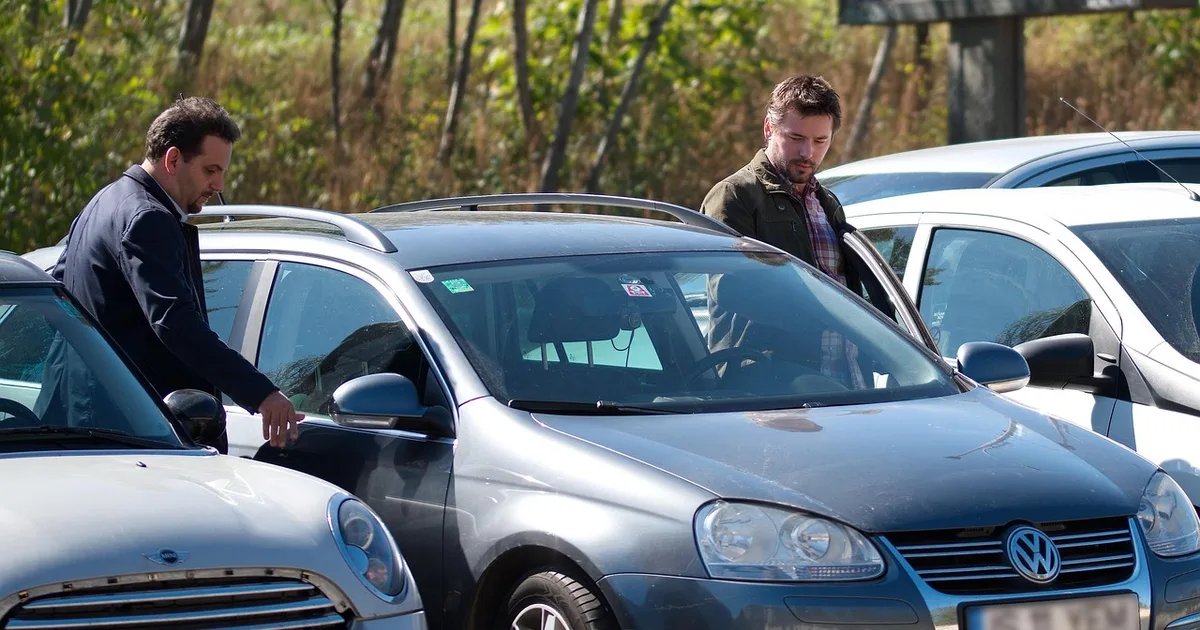
Auto Dealer Insurance Cost 2026: Garage Liability, Open Lot, Floorplan and Bond Requirements
Auto dealer insurance is a stack of separate policies, not one product. A small used-car lot typically needs garage liability, dealer open lot physical damage on its inventory, garagekeepers if it holds customer cars, workers’ compensation once it has employees, and a surety bond to get licensed, with total cost driven mostly by inventory value and headcount. Figures below are planning ranges as of November 2026, not quotes.
My view after reading the state bond notices and carrier guidance for this piece: most dealers shop for a premium and then discover, during a claim or a floorplan audit, that the policy they bought does not match the risk they run. The expensive mistakes are structural, not about price. A lot with $400,000 of inventory insured on a $150,000 schedule will save money every year until the day a hailstorm shows up. This guide is written for independent used-car dealers and wholesalers in the United States, including the many Spanish-speaking owner-operators in Texas, California and Florida.
What is a realistic auto dealer insurance cost in 2026?
Think in layers, because each layer is priced differently. The table gives rough planning ranges drawn from broker and carrier guidance, which vary widely by state and by the individual dealer.
| Coverage layer | What it protects | Planning range (annual, small independent lot) |
|---|---|---|
| Garage liability | Injuries and property damage from your operations, including test drives | Roughly $1,300 to $4,000 for small lots; more with higher limits |
| Garagekeepers | Customer or consignment cars in your care | Often a few hundred to a few thousand dollars |
| Dealer open lot (physical damage) | Inventory you own, against theft, fire, hail, vandalism | Priced as a rate per $100 of values; a percent or two of inventory is common in moderate-risk areas, far more in hail zones |
| Workers’ compensation | Employee injuries | Rate per $100 of payroll by class code |
| Dealer E&O | Title, odometer and disclosure errors | Often a modest add-on; availability varies |
| Surety bond | Licensing requirement, protects buyers and state | Often about 1% to 3% of the bond amount with good credit |
One broker site quotes a basic dealer package near $50 a month, which is technically true and practically useless. That figure is a bare liability shell. Once you add physical damage on real inventory, you are in a different price universe. For repair-shop-style liability, one carrier guide cites roughly $1,300 to $2,500 a year, and combined auto-service packages can run into the five figures. Those are shop figures; dealers differ because a dealer’s biggest exposure is the stock itself.
If you want a plain explanation of how the liability piece is rated before you read on, my garage liability insurance cost guide goes through the exposure bases carriers use.
What is dealer open lot coverage, and why is it the biggest line?
Dealer open lot coverage (DOL) is physical damage insurance on vehicles you own and hold for sale, covering perils like theft, fire, flood, hail and vandalism. It is priced on inventory values, which is why it usually becomes the largest or most volatile line on a dealer’s program.
Three mechanics matter more than the rate.
Reporting basis. Some carriers write DOL on a fixed limit per location, others on a reporting form where you declare values monthly. Under a fixed limit, if your lot swells past the limit in a strong month, the extra cars are effectively uninsured or subject to a coinsurance penalty. Ask what happens to a vehicle you bought on Tuesday and have not yet reported.
Perils and deductibles. Hail is the quiet killer in Texas, and a flood or windstorm can hit a lot in Florida. Some carriers apply a separate, higher named-storm or hail deductible, sometimes a percentage of the damaged values. A $2,500 flat deductible looks great in a quote and means nothing if the wind deductible is 5% of the lot.
Valuation. Most forms pay actual cash value, often capped at what you paid or at a retail price guide figure. A car you reconditioned with $1,800 of work may still be valued at its purchase cost, so keep receipts and ask whether reconditioning is scheduled.
Dealers in my experience of reading claim files and broker threads underinsure here more than anywhere else, because inventory fluctuates and the peak number feels like a worst case that will never happen. Insure to your seasonal peak, not your average.
What do floorplan lenders require you to insure?
Floorplan lenders almost always require physical damage coverage on every financed unit, with the lender named as loss payee or lienholder. They also expect you to keep the policy in force and may audit certificates, so a lapse can trigger a default notice before any claim exists.
The practical checklist when a lender sends its insurance requirements:
- Coverage amount at least equal to the financed balance on each unit, or full inventory value if the agreement says so.
- Lender listed as loss payee on the dealer open lot policy, with a lender’s loss payable endorsement where the agreement asks for it.
- Notice of cancellation to the lender, which not every carrier will promise for a small account.
- Deductible limits. Some agreements cap the deductible you may carry because the lender wants the loss to be mostly insurer-funded.
- Specific coverage for cars at auctions, in transit or at off-site storage, if financed units are allowed there.
The lender’s own agreement is the authority, not a broker’s summary. One failure I see described repeatedly in dealer forums and broker write-ups is the “out of trust” scenario: a car is sold, the dealer is slow to pay off the floorplan line, and the lender discovers that the insurance claim for a later theft pays the dealer rather than the lender because the loss payee clause was missing from the policy. That is a composite of patterns lenders and brokers describe, not a single named case. The lesson is the same in each version: the endorsement on paper matters more than the quote.
If you are weighing the whole business insurance picture, the car dealership insurance cost article lays out the broader program this sits inside.
Do garagekeepers and garage liability both apply to a dealer?
Yes, if you ever hold a car that you do not own. Garage liability covers harm to others caused by your operations, such as a test-drive collision or a customer injured on the lot. Garagekeepers covers damage to a customer’s or consignor’s vehicle while it is in your care, custody or control, which garage liability explicitly excludes.
Dealers get caught by this in three common situations:
- Consignment. Selling cars on behalf of an owner means their vehicle sits on your lot with your name on the lease.
- Trade-ins awaiting appraisal or paperwork. Until the title and bill of sale are executed, ownership is gray.
- Service bays. Even a lot with a two-bay shop falls into repair-shop territory.
Garagekeepers can be written on a direct primary basis (covering the customer car regardless of your fault), an excess basis, or a legal liability basis (only if you are legally liable). The difference is worth reading carefully, and my garagekeepers insurance cost guide breaks down each form. If your lot also does mechanical work, see the auto repair shop insurance cost article.
Which dealer liability exposures do odometer and title claims create?
Odometer, mileage and title claims are the dealer-specific exposures that standard garage liability usually does not pick up. They are statutory and disclosure claims, not bodily injury or property damage, so they fall into a gap unless you buy a dealer errors and omissions policy or a specific endorsement.
Federal law is the backdrop. The Truth in Mileage Act framework in 49 U.S.C. Chapter 327 requires mileage disclosure on transfer and provides civil liability for odometer tampering; under 49 U.S.C. § 32710, an injured buyer can recover the greater of three times actual damages or $10,000, plus attorney’s fees (verify the current text before relying on this). The FTC separately requires dealers to post a Buyers Guide on used cars, which is explained in the agency’s Dealer’s Guide to the Used Car Rule. Violating either can produce claims no liability policy was written to answer.
A composite example, built from patterns in published dealer-defense write-ups rather than any single case: a dealer buys a vehicle at auction with a mileage notation the seller labeled “not actual,” resells it with the odometer reading and no disclosure, and the buyer sues. The dealer assumed the auction carried the risk. The auction’s arbitration rules covered a narrow window and a narrow issue, and the lawsuit came months later. Defense costs alone exceeded the car’s value.
What to ask a broker: Does the E&O cover statutory damages, defense for regulatory complaints, title and lien failures, and do exclusions say “odometer” or “mileage” anywhere? Many policies exclude knowing violations, which is fair, but make sure “knowing” is defined narrowly.
Which dealer surety bonds do states require, and how do they differ from insurance?
Most states require a dealer to post a surety bond to be licensed. The bond is a guarantee to the state and the public, not coverage for you, and the premium you pay is a small percentage of the bond amount.
Two examples I could verify or partly verify:
| State | Bond amount | Notes |
|---|---|---|
| Texas | $50,000 | The TxDMV bulletin on HB 3533 says the motor vehicle dealer surety bond requirement was raised to $50,000 effective September 1, 2021, from $25,000. See the TxDMV bond notice and 43 Texas Administrative Code § 215.137 for exceptions |
| Florida | $25,000 | Commonly cited by surety providers for the Florida motor vehicle dealer bond; confirm with the Florida DHSMV |
| California | $50,000 (commonly cited) | Some sources note different amounts for wholesalers or by dealer type; confirm with the California DMV |
Several surety-company sites still publish the old Texas figure of $25,000, a good reminder that bond information on commercial pages ages badly. Go to the regulator.
A bond is not insurance in a practical sense. If a customer wins a claim against it, the surety pays and then collects from you, usually under an indemnity agreement you signed, often personally. Premium depends mostly on personal credit, so a dealer with weak credit may pay several times what a prime applicant pays. Some states also set separate insurance minimums, such as a garage liability requirement, so read the licensing checklist rather than assuming the bond covers it.
For the broader commercial vehicle picture, particularly if you own demo vans or a transport truck, commercial auto insurance cost is the neighboring topic.
How do auctions, transport, test drives and rating factors change my risk?
Auctions and transport create gaps between the moment a car is yours and the moment it is on your insured premises. A vehicle you bought on a bid screen is yours, often immediately, but your open lot policy may only respond at a scheduled location or may need a transit extension.
Three practical points:
- At the auction: the facility’s insurance is generally for its own liability and not for your purchases. Damage after the sale but before pickup is a dispute you may lose.
- In transit: a third-party hauler’s cargo coverage may be limited per vehicle, with exclusions for hail or theft. Ask for the certificate and the per-unit limit, and check whether your policy has a “while in transit” extension.
- Test drives: the single most frequent liability event on a retail lot. Insurers like written policies: valid license copy, a company representative in the car for first drives, a signed acknowledgement. A dealer who hands keys to an uninsured driver with no paperwork invites both a claim and a coverage argument.
Towing operators face a related set of questions about customer-vehicle custody, covered in the towing company insurance cost guide.
What rating factors move a dealer’s premium?
Carriers price dealers on a handful of exposure bases, and several of them you can influence before you submit.
| Factor | Why carriers care | What you can do |
|---|---|---|
| Peak inventory value | Drives open lot premium and the limit | Report accurately; do not under-report to save |
| Retail vs wholesale | Retail has more test drives and walk-in traffic | Be clear on your sales mix |
| Employees and drivers | Liability and workers’ comp base | Run motor vehicle reports on anyone who drives |
| Lot security | Theft claims are frequent for certain models | Fencing, lighting, cameras, key control |
| Location | Hail, flood and crime vary by ZIP code | Ask about location-specific deductibles |
| Loss history | Three to five years of claims | Clean up open claims before renewal |
| Vehicle mix | High-theft models or luxury stock cost more | Consider limits per vehicle |
| Additional services | Financing, repair, detailing | Disclose them, or risk a coverage denial |
Honest, complete applications matter more than most dealers expect. A misdescribed operation, say a “no repair” lot that actually has a service bay, is a classic denial trigger.
How do I shop for dealer insurance without getting the wrong policy?
Start with a broker or agent who writes dealers every week, because the forms are specialized and many general small-business agents place a dealer in a standard policy that excludes the core exposure. Then run the checklist:
- Gather your inventory peak, last three years of loss runs, payroll by role, and the floorplan agreement.
- Ask for the garage liability form (the dealer-specific form, not a general liability policy), and read the exclusions.
- Confirm the open lot basis (reporting or fixed limit), the valuation, the deductibles for hail and flood, and whether reconditioning is covered.
- Ask for dealer E&O or an equivalent, and whether it includes regulatory defense.
- Put the lender’s loss payee language in writing before you bind.
- Ask for the bond separately, and shop it as its own product.
- Get quotes from at least three carriers on the same limits so you are comparing like with like.
Property exposures at your office or showroom, such as a building, signs and contents, sit in a different policy, and the commercial property insurance cost guide is useful there. Employee theft of titles, deposits or funds belongs under commercial crime insurance, which dealers frequently forget.
For Spanish-speaking owner-operators in Texas, California and Florida, the same rules apply, but ask your agent to provide the policy summary and any signed acknowledgement in a language you read comfortably. A signature on a form you could not fully read is a weak footing in a coverage dispute.
What mistakes cost dealers the most?
These are the errors I see repeated in broker commentary and dealer-association material, in rough order of damage.
Insuring to average inventory instead of peak. Fixed limits get exceeded in good months, and the overage is not insured.
Assuming the auction or the transporter carries the risk. Their coverage usually protects them, not you.
Buying liability but skipping E&O. Title and odometer claims fall in the gap.
Missing the loss payee clause. It can break the floorplan agreement and the claim payout simultaneously.
Unclear consignment paperwork. If a car is not yours, garagekeepers should respond; if the contract says nothing, you may be arguing with two insurers.
Treating the bond as a policy. If a customer claim hits the bond, you owe the surety every dollar it pays.
Giving out keys freely. A loose key policy raises theft frequency and gives the carrier grounds to contest a claim.
Not telling the carrier about a service bay or financing arm. Undisclosed operations are among the quickest ways to a denied claim.
The fix for nearly all of these is the same: a ten-minute conversation with your broker, with the lender agreement and a lot photo in hand, before renewal and not after a claim.
Bottom line. The short version: expect insurance to cost more than a bare-bones quote suggests, price your open lot coverage against peak inventory, read the lender requirements before you bind, keep the bond and insurance mentally separate, and buy E&O if you sell vehicles with title or mileage exposure. Confirm all bond amounts and insurance minimums on your state regulator’s own page, since numbers in this article are time-stamped to November 2026 and some come from commercial sources rather than the statutes themselves.
This article is for general informational purposes only and does not constitute insurance, legal or financial advice. Premiums, bond amounts and licensing rules vary by state and change over time; confirm current figures with a licensed insurance agent, your state’s motor vehicle regulator and your floorplan lender before making decisions for your business.
How much does auto dealer insurance cost in 2026?
There is no single price. Small independent used-car lots commonly land in the low-to-mid four figures a year for garage liability alone and well into five figures once open lot physical damage, workers' comp and E&O are added. Inventory value, employee count, lot security and claims history drive it. Treat any range as a planning figure and get written quotes.
What is dealer open lot coverage?
Dealer open lot (DOL) coverage is physical damage insurance on the vehicles you own and hold for sale, covering perils such as theft, fire, hail, flood and vandalism. It is separate from garage liability, which pays other people's claims, and separate from garagekeepers, which covers cars that belong to customers.
What is the difference between garage liability and garagekeepers?
Garage liability pays when your operations injure someone or damage their property, for example a test-drive crash or a customer slipping on the lot. Garagekeepers pays for damage to a customer's or consignor's vehicle while it is in your care. Dealers who take trade-ins on consignment or hold cars for repair usually need both.
Does my floorplan lender require insurance?
Almost always. Lenders typically require physical damage coverage on every financed unit, with the lender named as loss payee or lienholder, and they may ask for certificates on renewal. The exact limits and deductibles sit in your floorplan agreement, so read that document, not a summary.
How much is a used car dealer surety bond?
It depends on the state. Texas currently requires a $50,000 motor vehicle dealer bond per its DMV, and California and Florida sources commonly cite $50,000 and $25,000. You do not pay the full face amount; you pay a premium, often quoted at roughly 1% to 3% of the bond for good credit. Verify with your state agency.
Is a surety bond the same as insurance?
No. A bond protects your customers and the state. If you break licensing rules and a customer is harmed, the surety pays and then comes after you to be reimbursed. Insurance protects you. You usually need both to be licensed and financed.
Does garage liability cover odometer or title problems?
Usually not. Claims that you misdescribed mileage, sold a car with a defective title or failed to deliver title are professional-type exposures that standard garage liability often excludes. Ask a broker about dealer errors and omissions or a title-specific endorsement, and confirm it responds to statutory claims.
What affects dealer insurance premiums the most?
Inventory value on the lot at its peak, number of employees and drivers, whether you wholesale or retail, how many test drives and out-of-state transports you do, lot security such as fencing, cameras and lighting, location for hail and theft, and your loss history for the last three to five years.
How can I lower my dealership insurance cost?
Report inventory honestly but accurately, raise physical damage deductibles you can absorb, add cameras and perimeter lighting, restrict who can drive demo cars, document test-drive policies and keys, and shop with an agent who places dealers regularly rather than a general small business agent.
Do I need coverage for cars I buy at auction before they reach my lot?
Yes, and this is a common gap. A car you have bought but not delivered is often outside your premises coverage while it sits on an auction lot or travels on a transporter. Ask about transit coverage and when your open lot policy begins, because the auction's own protection typically stops at the gate.
관련 글

Car Dealership Insurance Cost 2026: What Used and New Car Dealers Actually Pay and Why
Repossession Agency Insurance Cost 2026: Coverage Stack, Planning Ranges, and State License Rules

Car Hauler Insurance Cost 2026: Liability, Cargo Limits and What Moves the Premium

Garage Keepers Insurance Cost 2026: What It Covers, Coverage Forms & How to Price It Right

Assisted Living Facility Insurance Cost 2026: Liability, Abuse Coverage, Per-Bed Rating