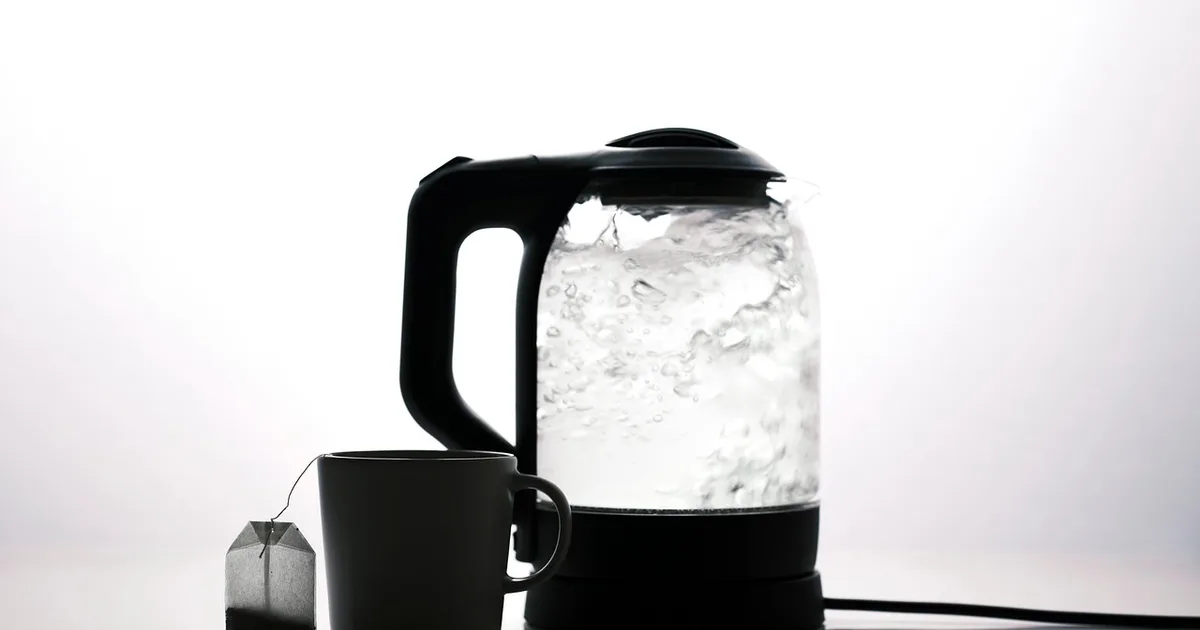
How to Choose an Electric Kettle: Materials, Wattage, Safety
How to choose an electric kettle comes down to four decisions in a fixed order: confirm the safety features, pick a body material you can keep clean, size it to the amount of water you really heat, and add temperature control only if you drink tea or coffee that needs it. Skipping the order is how people end up with a handsome kettle they cannot descale.
How do you choose an electric kettle that fits your kitchen?
Most kettle shopping goes wrong because people start with the last question, a fancy digital display, instead of the first one, whether the thing switches itself off safely. I would flip that. A kettle does one job. The best ones do it quietly, safely, and for years.
Here is the order I would use, and the reason for each step.
| Step | What to check | What happens if you ignore it |
|---|---|---|
| 1. Safety | Auto shut-off, boil-dry protection, a recognized safety mark | Damaged element, scorched base, fire risk |
| 2. Cleanability | Wide opening, accessible interior, removable filter | Scale builds up and you give up cleaning it |
| 3. Material | Glass, stainless steel, or plastic exterior with a steel interior | Breakage, burns, or taste problems |
| 4. Capacity | Size matched to household | Wasted time and energy on small batches |
| 5. Extras | Temperature presets, keep-warm, gooseneck spout | Paying for features you never use |
If you are fitting out a first kitchen, this fits alongside the basics in our first kitchen essentials guide, where a kettle is one of the cheapest items that gets used daily.
What is the difference between glass, stainless steel, and plastic kettles?
The three materials trade visibility, durability, and surface heat. No material is universally better, and each has a weakness the marketing copy tends to skip.
Glass (usually borosilicate or tempered heat-resistant glass) lets you watch the water boil and see scale as soon as it forms. That alone makes it easy to keep clean. The costs are fragility and a body that gets hot unless it has a protective sleeve. Glass kettles also tend to show every fingerprint and water spot.
Stainless steel is tough and tends to hold up in a busy household. A double-walled version keeps the outside much cooler, which matters with kids or a crowded counter. The tradeoff is that you cannot see inside, so scale hides until it is thick. Single-walled steel gets hot outside, much like glass.
Plastic bodies are lightweight and cheap, and they are the most common type in many markets. The practical concern is what touches the water. A plastic body with a stainless steel interior is different from one where the water touches plastic. Check the product description for the interior, the lid underside, and the spout filter.
| Material | Strength | Weakness | Best for |
|---|---|---|---|
| Glass | See water and scale | Breakable, hot outside | People who like to watch and clean often |
| Stainless steel, single wall | Durable | Hot outside, hidden scale | Rough use |
| Stainless steel, double wall | Durable and cooler outside | Hidden scale, usually pricier | Families, small kids |
| Plastic body, steel interior | Light and affordable | Plastic lid or spout parts | Budget buyers who still check the interior |
Whichever you choose, give a new kettle a couple of rinse boils. A faint smell on first use is normal. A strong chemical smell that does not fade after several boils is a reason to return it.
How many watts and what voltage does a kettle need?
Wattage decides how fast the water boils, and your outlet decides how much wattage is possible. This is the clearest difference between US and UK kettles, and it explains why a UK-style kettle feels dramatically quicker.
In the US, standard outlets deliver 120 volts, and a typical kitchen circuit is rated 15 amps. That caps most plug-in kettles at roughly 1,500 watts. In the UK, outlets deliver 230 to 240 volts and the plug fuse is typically 13 amps, which allows kettles of around 3,000 watts. Same job, about double the power.
The physics is straightforward. Heating 1 liter of water by 80 degrees Celsius (roughly from a cool tap to boiling) takes about 335 kilojoules, which is around 0.093 kilowatt-hours. At 1,500 watts the ideal heating time for that liter is about 3.7 minutes. At 3,000 watts it is about 1.9 minutes. Real kettles are a bit slower because of heat loss, and a kettle only boils as many liters as you put in.
That calculation leads to a point most reviews miss: watts change speed far more than they change the energy bill. Boiling a liter costs about the same energy in a 1,500 watt kettle and a 3,000 watt one. What costs you money is boiling more water than you need. If you want to cut that waste, filling to the mug count rather than to the top helps more than any wattage upgrade, and it ties in with the habits in our utility bill saving guide.
One practical note: the U.S. Department of Energy publishes general guidance on household electricity use, and the numbers above are standard physics, not a brand claim. Always read the wattage on the label of the specific model you buy, since regional versions of the same kettle can differ.
Do you need a temperature-control kettle?
Only if you regularly make drinks that suffer at a full boil. A temperature-control kettle holds the water at a chosen temperature, and a keep-warm mode holds it there for a while. It adds cost and one more thing that can fail.
Where it earns its place:
- Green and white tea. Many tea sellers recommend water well below boiling for green and white teas, commonly in the range of about 70 to 85 degrees Celsius, because hotter water pulls out bitterness. Check the instructions on your own tea.
- Pour-over coffee. Many coffee guides suggest water a little below boiling, often in the mid-90s Celsius.
- Baby formula. Follow the formula maker’s and your pediatrician’s instructions on water preparation. A kettle with a hold setting can make that routine easier, but it does not replace those instructions.
Where it does not: black tea, herbal tisanes, instant noodles, oatmeal, and mugs of cocoa. They want fully boiling water, which every kettle can do.
A cheaper trick if you only occasionally want cooler water: boil, then wait a few minutes. It is crude, but for a once-a-week green tea habit it beats paying for presets.
Altitude also matters. Water boils at a lower temperature the higher you live, losing roughly one degree Celsius for every 300 meters or so. If you live in the mountains, “boiling” is already a bit cooler than the packet assumes.
What size electric kettle is right for your household?
Match capacity to your normal batch, not your biggest dinner party. Most kettles list a maximum fill line and a minimum fill line, and boiling below the minimum can cause problems.
| Household | Typical need | Capacity to consider |
|---|---|---|
| One person, one mug at a time | 250 to 500 ml | 0.8 to 1.2 liters |
| Couple, tea and coffee daily | 500 to 1,000 ml | 1.2 to 1.7 liters |
| Family of four or an office kitchen | 1,000 ml and up | 1.5 to 1.7 liters, or a second kettle |
Large kettles are not a free upgrade. A 1.7 liter kettle with only a mug of water inside will still work, but it is heavier to carry and harder to pour precisely. If you routinely fill a teapot plus a French press, though, a 0.8 liter model will drive you mad.
Which safety features and certifications should you look for?
Look for three: automatic shut-off at the boil, boil-dry protection when the water runs out, and a recognized safety listing for your market. These are separate things, and the first two are often described in one vague phrase on cheap listings.
- Auto shut-off uses a steam or temperature sensor to cut power once the water boils.
- Boil-dry protection cuts the heating element if there is no water or too little. Without it, switching on an empty kettle can ruin the element.
- Safety listing. In the US, look for an accepted testing-laboratory mark such as UL or ETL on the product and packaging. In the UK, look for a UKCA or CE-type conformity mark and a plug that meets standards.
For government-level safety information, the U.S. Consumer Product Safety Commission lists product recalls and safety warnings, and UK shoppers can look at Electrical Safety First, a charity that publishes guidance on small appliances. Searching a brand and model against a recall list before buying takes one minute and costs nothing.
Also check the base. Look for a cordless design with a 360-degree base so you can lift and replace the kettle from any side, a lid that locks, and a handle that stays clear of the steam. These details matter more than the color.
How do you clean and descale an electric kettle?
Descaling is the maintenance task that keeps a kettle working. Limescale, the chalky film left by hard water, coats the element and the walls and slowly lengthens boil times. It is not dangerous in small amounts, but heavy scale can change the taste and flake into your tea.
A simple routine:
- Fill the kettle to about half with water.
- Add citric acid or white vinegar in the amount your kettle’s manual suggests. Do not use a cleaner the manual forbids.
- Bring it to a boil, switch it off, and let it sit for 20 to 30 minutes.
- Pour it out and scrub gently with a soft sponge if there is residue.
- Fill with clean water, boil, and discard twice to clear any taste.
How often? In hard-water regions, once a month. In soft-water regions, every two or three months. Check the filter on the spout, too. A clogged mesh filter is the most overlooked reason for a kettle that pours slowly.
Never immerse the base or the cord in water, and the same caution applies to other countertop appliances, as in our air fryer cleaning guide. Wipe the exterior with a damp cloth, and let the kettle dry with the lid open.
A small habit that helps: don’t leave water in the kettle overnight. Fresh water tastes better, and standing water leaves more scale on the walls over time. Making good coffee at home often starts with a good water routine; the full process is laid out in our home barista beginner’s guide.
What mistakes do people make when buying an electric kettle?
The most common one is buying for looks. This is a composite example, not a single real customer story: a shopper picks a narrow-necked glass kettle because it looks great in photos. Three months in, a white film covers the bottom, no hand or brush fits through the opening, and the only fix is boiling vinegar over and over. The film never fully lifts, and the kettle gets replaced. One look at the opening size beforehand would have prevented it.
Other repeat mistakes:
- Ignoring the minimum fill line and running the kettle nearly empty.
- Buying temperature control for a black tea household. The presets sit unused.
- Overfilling past the max line, so boiling water spits from the spout. This is the usual cause of kettle burns.
- Trusting vague listings. If a listing never states auto shut-off and boil-dry protection by name, assume neither until you see proof.
- Skipping the return policy. A chemical smell that will not fade is a refund case.
If you are timing a purchase, small appliances follow the same sale cycles as larger ones, which we break down in our best time to buy appliances guide.
Quick buying checklist
Before you pay, run through this list:
- Auto shut-off and boil-dry protection both named on the listing.
- A recognized safety mark for your country.
- Opening wide enough for a sponge or hand.
- Material you will actually maintain (glass for visibility, double-wall steel for durability).
- Capacity matched to your household, not to your imagination.
- Temperature control only if you make delicate tea, pour-over, or formula.
- A return policy that covers odor or defects.
The best electric kettle is the one you descale on schedule and fill only as much as you need. Everything else is detail.
This guide is general buying information, not a review of any product, and I have not tested the models mentioned in any listing. Specifications, standards, and local electrical ratings vary by country and model, so confirm details on the product label and manufacturer page before you buy. For medical questions such as infant formula preparation, follow your pediatrician’s and the formula maker’s instructions.
How do I choose an electric kettle?
Start with safety (automatic shut-off plus boil-dry protection and a recognized safety listing), then pick a material you can keep clean, a capacity that matches how much water you really heat, and only then decide whether temperature control is worth paying for.
Is a glass or stainless steel electric kettle better?
Neither wins outright. Glass lets you see scale and water level but is breakable and can be hot to the touch. Stainless steel is tougher and, if double-walled, stays cooler outside, but you cannot see inside it. Pick based on whether visibility or durability matters more in your kitchen.
Are plastic electric kettles safe?
Kettles with plastic bodies are widely sold, and the real question is which parts touch the water. Look for a kettle whose interior surface is stainless steel or glass, and check the product page for the lid and spout material. If a new kettle smells strongly of plastic, boil and discard a few batches before using it.
How many watts should an electric kettle have?
On a standard US 120V outlet, most kettles top out around 1,500 watts. In the UK and much of Europe, 230 to 240V outlets allow up to roughly 3,000 watts, which boils noticeably faster. More watts mainly means less waiting, not a big change in the energy used.
How big should my electric kettle be?
One person usually does fine with 0.8 to 1.2 liters. Two to four people, or anyone filling a teapot and a French press at once, will be happier with 1.5 to 1.7 liters. Oversized kettles waste time when you only need one mug.
Do I need a kettle with temperature control?
Only if you regularly make green tea, delicate white or oolong tea, pour-over coffee, or baby formula. Black tea, instant noodles, and oatmeal want full boiling water, so a basic model handles them fine.
How often should I descale an electric kettle?
In hard-water areas, once a month is a sensible habit; in soft-water areas every few months is enough. Boil water with citric acid or white vinegar according to the manufacturer's instructions, let it sit, then rinse and boil clean water a couple of times.
Why does my kettle taste like plastic or metal?
A new kettle often needs a few rinse boils. A lingering metallic or chemical taste usually points to heavy scale, old water left sitting, or a poorly made interior. Descale it, use fresh water each time, and return it if the smell does not fade.
What does auto shut-off actually do?
It cuts power when the water reaches a boil, using a steam or temperature sensor. A separate boil-dry feature stops the element when there is no water. Good kettles have both, and the product page should name each one.
How long does an electric kettle last?
There is no reliable single number because hard water, daily use, and build quality all change the answer. Replace it if the base gets scorched, the switch sticks, the cord feels hot, or scale will not come off.
관련 글

Korea Tax Free Shopping Refund for Tourists: Limits, Steps and Real Net Amounts (2026)

National Pension Refund for Foreigners in Korea: Who Gets the Lump Sum in 2026
How to Choose a Vacuum Insulated Bottle: Steel, Lids, Size and Care (2026)

Mother's Day & Father's Day Gift Guide 2026: What Parents Actually Want
Best Humidifier for Winter 2026: Ultrasonic, Evaporative or Warm Mist?
