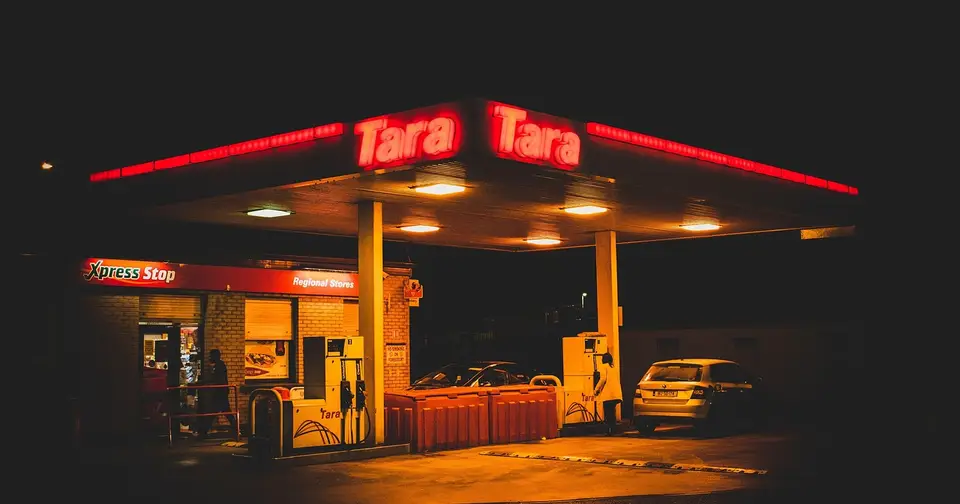
Gas Station Convenience Store Insurance Cost in 2026: What Owners Pay and Why
A gas station with a convenience store usually pays somewhere between a few thousand and the low tens of thousands of dollars a year for its core insurance package, and the spread comes almost entirely from fuel volume, tank age and what you sell inside. As of 2026-11-23, broker guides quote roughly $1,500 to $5,000 for a small station and $4,000 to $12,000 for a mid-size one, but those are marketing ranges, not quotes. Treat them as a budgeting starting point and expect your own number to land above or below depending on your tanks, state and loss history.
This guide walks through what each line costs, which pieces are non-negotiable, and where owners get surprised. It is general information from published broker and government sources, and I could not open every primary page, so I flag what is hedged.
How much does gas station convenience store insurance cost?
Expect roughly $1,500 to $25,000 or more a year for the core package, depending on size. These are broker-published ranges as of 2026-11-23, and they mostly assume $1 million per-occurrence liability limits.
| Operation type | Typical published range (per year, core package) | What pushes it up |
|---|---|---|
| Small station or small store | about $1,500 to $5,000 | Few pumps, low fuel volume, clean history |
| Mid-size station with convenience store | about $4,000 to $12,000 | Higher revenue, alcohol and tobacco, more staff |
| High-volume or multi-location operator | about $10,000 to $25,000+ | Several tank fields, 24-hour hours, claims history |
Source: Wexford Insurance published guides, as cited in a search summary on 2026-11-23. A separate Wexford guide gives a lower band of $1,000 to $4,500, and a Texas agency lists $2,500 to $5,000 for a $1 million GL policy. The gaps tell you something: sizing assumptions differ, so no single figure is “the” price. Do not budget off one blog.
Two reading tips. First, a number that excludes pollution coverage is not a gas station number. Second, ranges that read “from $805” are entry prices for a store without pumps.
What does each coverage line cost?
General liability is the smallest line, and pollution, property and workers’ comp together usually dwarf it. The table shows indicative bands, hedged, since only general liability has multiple published price points I could find.
| Coverage | What it pays for | Cost signal (hedged) |
|---|---|---|
| General liability | Customer injuries, slip and fall, property damage, legal defense | Broker pages cite about $800 to $2,000 for a basic store policy; stations with pumps run higher |
| Pollution / storage tank | Cleanup, third-party bodily injury and property damage from a release | Priced per tank and by tank age; ask for an itemized quote |
| Commercial property | Building, canopy, pumps, equipment, inventory | Rate per $100 of insured value; depends on construction and protection |
| Workers’ comp | Medical and wage benefits for injured staff | Rate per $100 of payroll by class code and state |
| Crime / money and securities | Employee theft, robbery, lottery cash | Usually a smaller flat add-on |
| Business interruption | Lost income after a covered physical loss | Often a percentage of property premium or sold in a package |
| Equipment breakdown | Pumps, coolers, refrigeration, point-of-sale | Smaller add-on or bundled |
If a quote lists only “liability” and “property” for a station that pumps fuel, read it again. Missing pollution coverage is the most expensive gap on this page.
Does general liability cover fuel spills and slips at the pump?
General liability covers the slip on a wet floor and the customer who trips over a curb. It generally does not cover a petroleum release, because standard policies carry a pollution exclusion.
Fuel stations create both kinds of exposure at once. The sidewalk, the island and the store entrance are classic liability territory: a customer slips on a winter wet spot, a tire dislodges a display. A spill at the nozzle or a tank that weeps for months is different. That falls under pollution coverage, and policies differ on whether they respond to sudden releases, gradual ones or both, and on whether cleanup of your own site is included. The wording matters more than the headline limit. A $1 million limit that excludes gradual leaks protects you from the overfilled tank and not from the pinhole that went unnoticed for a year, which is the claim that tends to be expensive.
Ask your broker three questions: Does the pollution policy cover sudden and gradual releases? Does it include third-party claims from neighbors and groundwater, not only your own cleanup? Does it include defense costs outside the limit? A policy that answers no to any of these leaves real money uncovered. For a primer on that policy type, see environmental pollution liability insurance cost.
Do I need underground storage tank coverage?
If you own or operate regulated underground storage tanks, federal rules require you to demonstrate financial responsibility for cleanup and for injury or property damage to others. EPA’s published table lists $1 million per occurrence for petroleum marketers, with aggregate amounts of $1 million for 100 or fewer tanks and $2 million for more than 100 tanks, and lower per-occurrence amounts for some non-marketers. I read this in a search summary of EPA’s UST resource page and could not open every primary page, so confirm the current text.
You have options for meeting the requirement: commercial insurance, a state assurance fund where one exists, or other approved methods. What is allowed varies by state, and some state funds cover only part of a release. Do not assume a state fund replaces insurance. Many owners keep a pollution policy to cover third-party claims and costs a fund will not pay.
Primary sources to check:
- EPA: Resources for UST Owners and Operators
- EPA: Insurance for UST Financial Responsibility (July 2024)
- eCFR: 40 CFR Part 280, Subpart H
Your state environmental agency, not the federal page alone, runs the day-to-day tank program, so call them before you buy.
What does property and business interruption cover at a station?
Commercial property insurance pays to repair or replace the building, canopy, fuel dispensers, coolers and stock after a covered loss. Business interruption pays lost income and fixed costs while you rebuild, but only after a covered physical loss, and only within the time limit written on the policy.
Three gas-station quirks are worth raising with the broker. Canopy and pump damage from vehicle impact is common, so confirm how it is classified and whether there is a separate deductible. Spoilage of refrigerated and frozen stock after a power outage is often limited or sold as an add-on. And a closure caused by a pollution event or a regulator’s order does not automatically trigger business interruption; that is where business interruption insurance cost and the policy wording both matter. For a general view of the property side, read commercial property insurance cost.
How does alcohol, tobacco and lottery affect coverage?
Selling alcohol adds liquor liability exposure, tobacco and vape sales draw underwriting questions, and lottery sales add a cash-handling risk. None of these is automatically uninsurable, but each one has to be disclosed.
- Alcohol: Insurers often ask what share of sales is beer and wine, whether it is off-premises only, and how you check ID. A separate liquor liability policy or endorsement is common. See liquor liability insurance cost.
- Tobacco and vape: Expect questions about age verification and local licensing. Some carriers exclude specific products, so ask for the exclusion list in writing.
- Lottery and cash: Lottery tickets and cash drawers create theft and robbery exposure. Money and securities or crime coverage addresses it; see commercial crime insurance.
The cheapest way to create a claims fight is to leave a product off the application.
How much does workers’ compensation cost for a station?
Workers’ compensation cost follows payroll and your state’s class code rates, so there is no gas-station number that holds across states. Clerks face robbery risk and floor hazards, and attendants or fuel handlers add vehicle and chemical exposure.
Ask your carrier for the rate per $100 of payroll and the class codes assigned to cashiers and attendants. A misclassified employee can raise the premium or cause an audit surprise at year end. Premiums are also tied to your experience modification factor, which reflects past claims, so a clean record pays off for years. Our workers’ compensation insurance cost guide covers class codes and audits in detail. Because workers’ comp rules are set by state, verify your state’s requirement with its workers’ comp agency.
Can I bundle a gas station into a business owner’s policy?
Sometimes you can bundle the store, rarely the fuel. A business owner’s policy combines general liability, property and business interruption at a lower combined price, and it suits smaller retail. Many carriers decline or restrict BOP eligibility when a business sells motor fuel, so expect a specialty or petroleum marketer program instead.
| Option | Good for | Watch out for |
|---|---|---|
| Standard BOP | Store without fuel sales | Fuel and pollution often not eligible |
| Petroleum marketer package | Stations with pumps and tanks | Higher price, but fits the risk |
| Separate monthly policies | Owners with unusual setups | Gaps and overlaps between policies |
Read business owner’s policy cost for what a BOP bundles and excludes. If the umbrella limit matters to you, with traffic and fuel the severity of a bad claim can pass $1 million, so look at commercial umbrella insurance cost as well.
How do I shop for gas station insurance?
Ask at least three brokers who write petroleum marketers, give them identical limits, and compare the coverage forms, not just the price. A broker who only writes restaurants will send you to a standard market where pollution is excluded and the quote looks cheap for the wrong reason.
Checklist before you request quotes:
- Tank list with age, material, capacity, leak detection and last tests.
- Annual fuel gallons and inside sales, split by alcohol, tobacco and lottery.
- Payroll by role, with employee count.
- Five years of loss runs from prior carriers.
- Security details: cameras, cash drops, hours, safe policy.
- Your target limits, deductibles and any state financial-responsibility requirement.
When the quotes arrive, compare these items:
- Pollution limit, whether it includes gradual releases, and whether defense sits inside or outside the limit.
- Deductible per tank release.
- Retroactive date and claims-made versus occurrence form.
- Liquor, tobacco and lottery treatment.
- Property valuation method (replacement cost or actual cash value).
A bad example: a store owner buys the cheapest “convenience store” quote online, then discovers at a tank leak that the pollution exclusion is absolute. The saving was a few hundred dollars; the exposure was a cleanup that can run far past that. That is a composite illustration, not a documented case. For a similar retail family comparison, see restaurant insurance cost.
What mistakes make gas station insurance more expensive?
The mistakes that cost the most are under-disclosure, bare-minimum pollution limits and ignoring maintenance records. They raise premiums or sink claims.
- Leaving out a product line, such as vape or lottery, on the application.
- Buying liability only and assuming it covers a leak.
- Letting leak-detection and tank-testing records lapse.
- Skipping camera and cash-handling controls, which insurers ask about.
- Choosing a deductible you cannot actually pay on a bad day.
- Shopping once and renewing blindly for years while your fuel volume changes.
One more habit pays off: calendar your renewal ninety days out. Brokers need time to market a petroleum account, and a rushed renewal usually means taking whatever the incumbent offers. If you changed anything during the year, such as new pumps, longer hours, a second location or a beer cooler, tell the broker before renewal so the application matches reality.
Fixing these rarely requires a bigger budget. It requires paperwork, discipline and honest answers on the application.
This article is general information, not legal, insurance or financial advice. Premium ranges come from published broker and agency pages and search summaries as of 2026-11-23, not from quotes, and may not reflect your state or risk. Underground storage tank rules vary by state and I could not open every primary page; confirm requirements with EPA, your state environmental agency and a licensed insurance broker.
How much does gas station convenience store insurance cost?
Published broker ranges are wide. As of 2026-11-23, agency guides put a small station at roughly $1,500 to $5,000 a year, a mid-size station with a store at $4,000 to $12,000, and high-volume or multi-site operators at $10,000 to $25,000 or more for the core package. Those are marketing estimates, not quotes. Your fuel volume, tank age, state and claims history will move the number a lot.
Does general liability cover a fuel spill or tank leak?
Usually not. Standard general liability policies carry a pollution exclusion, so a leaking tank or a spill that reaches soil or groundwater is typically handled by separate pollution or storage tank coverage. Ask your broker to show you the exact exclusion wording and what the pollution policy covers, including cleanup, third-party claims and legal defense.
Do I need underground storage tank insurance?
If you own or operate regulated underground storage tanks, federal rules require you to show financial responsibility for cleanup and third-party damage. EPA's table lists $1 million per occurrence for petroleum marketers, with aggregate amounts that depend on tank count. You can meet it with insurance, a state fund or other approved methods. Check your state program and 40 CFR 280 Subpart H.
What is the cheapest part of gas station insurance?
General liability is usually the smallest line. Several broker sites quote a basic policy near $800 to $2,000 a year for a small store, though a station with pumps and a full store runs higher. Pollution, property, workers' comp and crime coverage usually cost more together than liability alone.
Does liquor, beer and wine sales raise my premium?
Yes, it usually does. Selling alcohol adds liquor liability exposure, and many insurers ask for the share of sales that comes from alcohol, whether you sell to-go only, and whether you train staff to check ID. Some carriers exclude it from the base policy and add it by endorsement or a separate policy.
Are lottery tickets, tobacco and vape products a coverage problem?
They can be. Tobacco and vape sales draw underwriting questions and sometimes exclusions, and lottery proceeds create a cash-handling and theft exposure that crime or money-and-securities coverage addresses. Tell the insurer what you sell before binding, because a product that was never disclosed is where claims disputes start.
How much does workers' comp cost for a gas station?
It follows payroll and your state's class code rates, so it varies more than almost any other line. Convenience store clerks have a robbery and slip-and-fall risk, and attendants who handle fuel add another. Get the rate per $100 of payroll from your carrier and compare it to your state's published rates; see our workers' comp cost guide.
Does business interruption cover a closed station?
It can, but only if the closure comes from a covered physical loss such as a fire, and only for the period and income limits in the policy. Pump-down time while a tank is repaired, or a state-ordered shutdown for a spill, may not qualify. Ask about extra expense, civil authority and extended period of restoration wording.
Can I bundle everything into a business owner's policy?
Part of it. A BOP can bundle general liability, property and business interruption for smaller retail operations, but many carriers do not write gas stations with fuel sales on a standard BOP. Expect a specialty or petroleum marketer program, and expect pollution, workers' comp and crime to be separate.
How do I lower my gas station insurance premium?
Keep tanks and piping documented and current, use leak detection and a camera system, train staff on ID checks and cash drops, raise deductibles where your cash reserve can take it, and ask several brokers who specialize in petroleum marketers to quote the same limits. Never cut a limit just to hit a price, especially on pollution.
관련 글
Campground Insurance Cost in 2026: What RV Parks and Campgrounds Pay and Why

Photography Studio Insurance Cost 2026: What a Rented Space Adds to Your Premium
Laundromat Insurance Cost in 2026: What Coin Laundry Owners Really Pay and Why

Surety Bond Cost 2026: Premium Rates, Bond Types, and How to Get Bonded

General Liability Insurance Cost 2026: What Small Businesses Really Pay by Trade