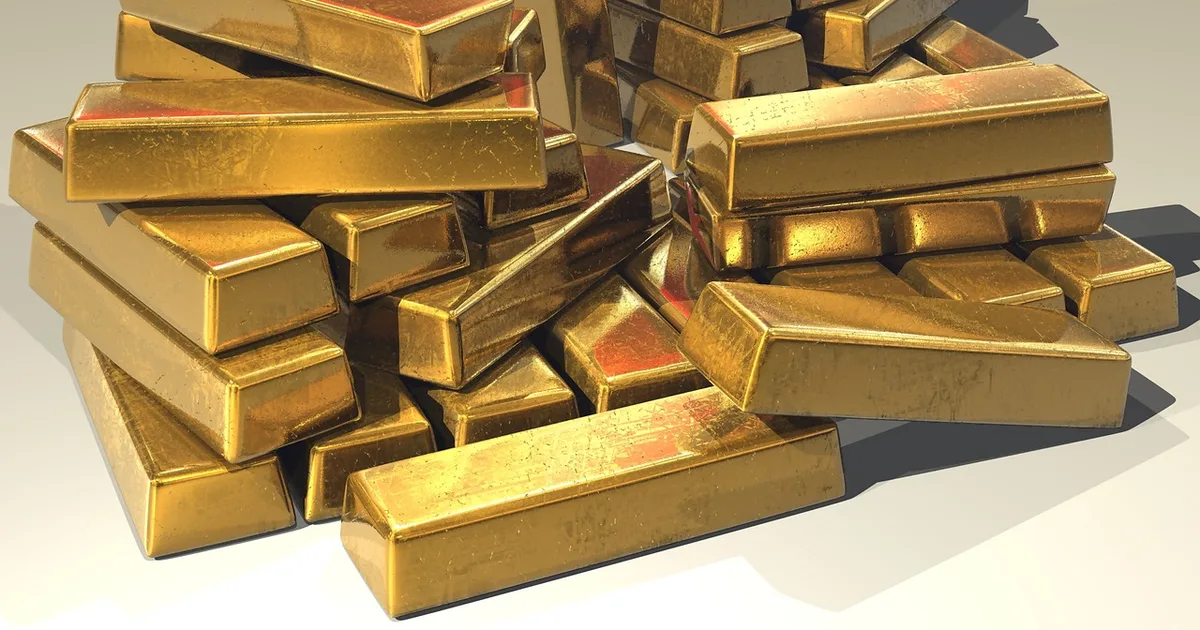
How to Invest in Gold in Korea: KRX Gold Market, Gold Banking, ETFs and Bars (2026)
The cheapest mainstream way to buy gold in Korea is usually the KRX Gold Market, which trades 1-gram units through a brokerage with no VAT.
This guide is Korea-specific, written for people living in Korea, Koreans abroad, or investors comparing Korean routes with US options like bullion dealers and gold ETFs. Exchange materials also describe trading gains there as tax-free, though I could not confirm how long that lasts.
How do you invest in gold in Korea?
You have four routes, and the real decision is about cost structure, not about which one sounds safest. The KRX Gold Market is an exchange where you hold gold as an account balance. Gold banking is a bank passbook that tracks gold by the gram. Gold ETFs are funds you buy like stocks. Physical bars come from dealers, banks and department stores.
A US reader can map them roughly like this. The KRX Gold Market resembles buying allocated metal through a brokerage rather than a coin shop. Gold banking is closer to an unallocated gold account at a bank. A gold ETF is the same idea as GLD or IAU, though the Korean versions have their own tax rules. Physical bars are physical bars: you pay retail premium and a sales tax.
| Route | Unit | Main costs | Tax on gains | Liquidity |
|---|---|---|---|---|
| KRX Gold Market | 1 g | Brokerage commission (about 0.3% is commonly cited) plus bid-ask spread | Described as tax-free on trading gains | Real-time on exchange days |
| Gold banking | Small gram units | Spread of about 1% each way is described for some banks | 15.4% dividend income tax | Bank-hours oriented |
| Korea-listed gold ETF | Whole shares | Fund fee and brokerage commission | 15.4% dividend income tax | Real-time on exchange days |
| Physical gold bar | From a few grams to 1 kg | 10% VAT plus manufacturing and dealer margin | No tax at sale, but VAT on purchase is not refunded | Depends on a buyer willing to repurchase |
Treat the fee figures as approximate. They come from secondary descriptions, and each broker, bank and dealer sets its own. The tax rows are the more important comparison, and I’ll go through them below. If you are also weighing other saving options, our guide to Korean savings account rates shows what the non-gold alternative pays.
What does gold cost in Korea right now?
Korean gold prices are the international dollar price converted at the won-dollar exchange rate, then nudged by local supply and demand. That is why a day can bring a falling world price and a rising Korean price.
Here are the recent reported numbers, with dates and sources, and no forecast attached. According to Etoday, on October 28, 2026 December gold futures in New York settled at USD 4,051.60 per ounce, while the KRX 1 kg product closed at KRW 173,190 per gram, up 1.64% on the day. Two days later, Global Economic reported that international gold had fallen to a four-month low, with silver slipping below USD 50. Those are news-report figures; exact closing prices may differ slightly from exchange data.
I am not saying gold is cheap or expensive here. Nobody can promise where it goes from a four-month low, and the same reports tied the pressure to sticky inflation and interest-rate uncertainty rather than to any change in gold itself. What matters for this guide is that you should read the Korean price as two stacked bets: gold in dollars and the won against the dollar. If you hold gold through an unhedged route, the exchange rate moves your result as much as the metal does. We discuss currency risk in our dollar outlook piece.
What is the KRX Gold Market and who can use it?
The KRX Gold Market is a spot gold exchange operated by the Korea Exchange. You buy and sell gold in 1-gram units through a brokerage, and the gold is held in custody rather than delivered to you. According to the exchange’s KRX Gold leaflet, listed products are 99.99% purity bars in 1 kg and 100 g sizes, and trading runs on weekdays during exchange hours (about 9:00 to 15:30 Korea time in the materials I saw; confirm current hours with the exchange).
Two practical points. First, you need a dedicated gold spot account at a participating brokerage. A regular brokerage account or an ISA does not trade it. Second, I could not verify whether non-residents can open one. Many Korean brokers ask for a resident registration number or an alien registration card, so a foreigner without one should expect friction and should ask the broker before planning around it.
The market has grown quickly. Korea Exchange data cited in news reports put first-half 2025 volume at 37.3 tonnes, about 4.1 times the prior-year period, and a daily volume above one tonne was reported for the first time in September 2025. I could not find 2026 annual statistics, so I won’t quote any.
Is the KRX Gold Market really tax-free?
According to exchange materials and several Korean news reports, trading gains on the KRX Gold Market are not subject to capital gains tax or dividend income tax, and they are not added to comprehensive financial income taxation. There is also no VAT when you buy or sell on the exchange.
This is the main reason people compare the market favorably with every other route. But I would be careful with it. Most of what I found was news coverage and blogs rather than the tax statute itself, and one source implied the treatment is guaranteed only through 2026. Whether it is a permanent rule or a time-limited carve-out is something I could not confirm. Before you put in a large amount, check the current guidance from the National Tax Service or a Korean tax professional.
The exemption also ends at the door of the exchange. If you withdraw physical gold, you pay 10% VAT plus a withdrawal fee. For most people the sensible reading is: leave the gold in the account unless you specifically need the metal in your hands.
How does gold banking work, and what does it cost?
Gold banking is a bank passbook account that tracks a balance of gold in grams. You buy and sell at the bank’s quoted price, which is a reference price plus or minus a fee. No metal changes hands.
The convenience is real: small amounts, automatic monthly purchases, no custody worries. The cost is the spread. Materials from one major bank describe a customer price set at the reference price adjusted by roughly 1%, which would mean about 2% lost on a round trip. I could not find current fee schedules for other banks, so compare your own.
The tax is the less friendly part. Trading gains are treated as dividend income, with 15.4% withheld (14% income tax plus 1.4% local tax). If your annual financial income, meaning interest and dividends combined, goes above KRW 20 million, the excess can be pushed into comprehensive taxation at progressive rates. Taking physical delivery is described as costing the international price plus a 5% fee and 10% VAT.
Who is it for? Someone who wants a low-friction accumulation habit and does not want to open a brokerage account. If you are choosing between an automatic gold-banking plan and a brokerage gold account, run the arithmetic on cost over your expected holding period.
How are Korean gold ETFs taxed?
Korea-listed gold ETFs are taxed as dividend income at 15.4% on trading gains, and the gains count toward the KRW 20 million financial-income threshold. Overseas-listed gold ETFs are generally taxed as capital gains at a flat 22% including local tax.
This catches Americans off guard because Korean equity ETFs are famous for tax-free trading gains. That benefit applies to domestic equity ETFs, not to gold. If you hold a gold ETF in a pension account or ISA, the tax can be deferred or reduced, which is why some investors keep their gold in a retirement wrapper. We compare those accounts in our ISA versus pension savings guide.
One more detail from the research: many Korea-listed gold futures ETFs are currency-hedged and carry an (H) in the name, so they remove the won-dollar effect that unhedged routes keep. I could not verify fund-specific fees, so read each fund’s prospectus. For the general ETF-versus-stock tradeoffs, see our ETF comparison.
What does buying a gold bar really cost?
Buying a physical bar in Korea adds 10% VAT to the sale price, and you generally cannot recover it when you sell. On top of that, the retail price includes fabrication and dealer margin. One blog estimated that margin at 3% to 7%, which is a personal-blog figure and only a rough guide; I could not verify any specific dealer’s buy-sell spread.
The consequence is simple. A bar starts in the hole. If you pay a retail price that includes VAT and margin, and a dealer then buys it back at something close to the spot price, the gap has to be recovered by price gains before you break even. The same amount held on the KRX Gold Market avoids both the VAT and the retail margin.
Bars make sense for gifts, for heirloom purposes, or for someone who wants a physical hedge and accepts the cost. They make less sense as the cheapest way to track the gold price. If you do buy, keep the receipt and the assay certificate, since a dealer will want them when you resell.
What goes wrong when people buy gold?
The most common mistake is skipping the exit price. Here is a composite example, not a real person.
Imagine a salaried worker who sees gold in the news and buys a 37.5 g bar from a local dealer. Three months later, a headline says international gold is up a little, so they go to sell. The buyback is well below what they paid, the 10% VAT is gone, and the dealer’s margin was never part of the buyback price. Gold rose, but their principal shrank.
What went wrong? They did not ask what they would receive if they sold the same day. They did not compare cheaper routes. And they put a lump sum into a news-driven move. The same money in a KRX account bought in several installments would have avoided the VAT and the margin, though it would not have protected them from a falling price. No route removes market risk.
The second mistake is forgetting the exchange rate. Gold in won moves with both the dollar price and the won, so a stable world price does not mean a stable local value. The third is assuming gold is a guaranteed safe haven: recent reports blamed sticky inflation and rate worries for pressure on gold, a reminder that “safe haven” describes a reputation, not a promise. For one more view on price outlooks and why they should be treated with caution, see our gold outlook article.
Before you buy, write down these three checks and confirm them.
| Check | Why it matters | Where to confirm |
|---|---|---|
| Gap between the buy price and the sell price | The gap is a loss you start with on day one | The same-day quote from the exchange, bank or dealer |
| USD/KRW exchange rate | The won price of gold moves even if the global price does not | Your bank’s posted rate |
| Tax and cost by route | The same gold is taxed and charged differently by route | The tax authority and the exchange or provider notice |
How should gold fit into a portfolio?
Gold pays no interest or dividends, so your return is the price change minus your costs. That makes the cost of the route matter more than it would for an income asset.
A sensible first step is choosing a ceiling: what share of your total assets are you willing to hold in gold, and over what time horizon. Many investors buy in installments rather than all at once, which spreads timing risk but does not remove it. I am describing a common approach, not recommending an allocation.
A short checklist: decide the purpose (price exposure, long-term hedge, or physical ownership), add up your annual financial income to see whether the 15.4% routes could push you into comprehensive taxation, calculate the buy-and-sell gap for the route you are considering, and confirm the current tax rules with the National Tax Service or the exchange. Rules and fees change, and everything here is as of early November 2026.
This article is general information, not investment, tax or legal advice, and it contains no price forecast. Gold prices, fees and tax rules change; verify them with the Korea Exchange, the National Tax Service and your financial institution before you act. Investment gains and losses are your own.
How do I invest in gold in Korea?
There are four mainstream routes: a gold spot account at a Korean brokerage that trades on the KRX Gold Market, a bank gold-banking passbook, a gold ETF, or physical bars. They differ mainly in fees, tax and how easily you can sell, so pick by purpose and holding period.
What is the KRX Gold Market?
It is a spot gold exchange run by the Korea Exchange where you buy and sell gold in 1-gram units through a brokerage account. Listed products are 99.99% purity 1 kg and 100 g contracts, traded on weekdays during exchange hours.
Are gains on the KRX Gold Market tax-free?
KRX materials and several news reports describe trading gains as free of capital gains tax and dividend income tax, and outside comprehensive financial income taxation. I could not confirm whether that treatment is permanent or time-limited, so check the National Tax Service before relying on it.
Is there VAT when I buy gold in Korea?
Buying gold bars from a dealer carries 10% VAT that you generally cannot recover when you sell. Trading on the KRX Gold Market has no VAT, but taking physical delivery triggers 10% VAT plus a withdrawal fee.
How is gold banking taxed?
Trading profit from bank gold-banking accounts is treated as dividend income, with 15.4% withheld (14% income tax plus 1.4% local tax). If your annual financial income exceeds KRW 20 million it can be pushed into comprehensive taxation.
Are gold ETFs listed in Korea tax-free like Korean stock ETFs?
No. The tax-free trading gain applies to domestic equity ETFs. Korea-listed gold ETFs are taxed as dividend income at 15.4%, while overseas-listed gold ETFs are generally taxed as capital gains at a flat 22% including local tax.
Can a foreigner open a KRX gold account?
Rules depend on your residency status and the brokerage, and I could not verify the current requirements. Many brokers require a Korean resident registration number or an alien registration card, so ask the broker directly before planning around it.
What are the fees on the KRX Gold Market?
Brokerage commissions are set by each firm; roughly 0.3% is commonly cited, but treat that as an approximation and check your broker's fee schedule. There is also a spread between bid and ask prices.
Why did Korean gold prices rise on a day international gold fell?
Korean prices are the international dollar price converted at the won-dollar exchange rate and adjusted for local supply and demand. A weaker won or local buying can lift the Korean price even when the dollar price slips. One news report described exactly that on October 28, 2026.
Should I buy gold now?
This article does not recommend buying or selling and offers no price forecast. Gold pays no interest or dividends, so decide your target share of the portfolio and your time horizon first, and compare the all-in cost of each route before committing.
관련 글

Korea Youth Future Savings Account (청년미래적금) 2026: Eligibility, Benefits, and How It Differs From the Youth Leap Account
Korean IPO Subscription (Gongmoju) Explained: How Allocation, Deposits and Refunds Work in 2026

US Stock Market Hours in Korea Time After Daylight Saving Ends (Nov 2026)

TurboTax vs FreeTaxUSA vs H&R Block: Best Tax Software 2026

How to Build an Emergency Fund: Step-by-Step Guide