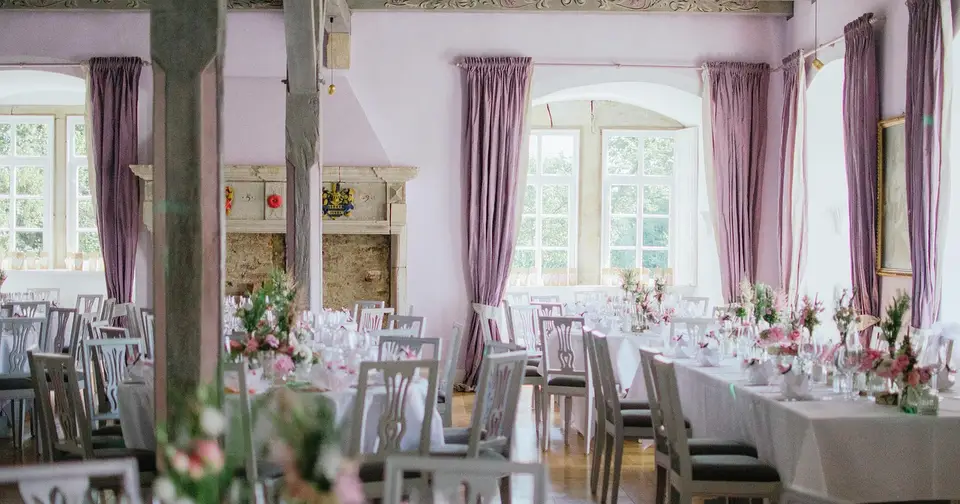
Wedding Venue Insurance Cost in 2026: What Owners Pay and What Each Policy Covers
Wedding venue insurance cost depends mostly on capacity, whether you serve alcohol, and the value of the building. Broker estimates as of November 2026 put a small-to-midsize venue at roughly $2,500 to $5,000 a year for a bundled program, while large venues can pay $7,000 to $12,000 or more. That is a seller range, not a rate card, so treat it as a sanity check before you collect real quotes.
How much does wedding venue insurance cost?
Published figures come almost entirely from brokers and agencies, who have a reason to sound reassuring. With that caveat, they line up better than you might expect. One venue-focused broker, Wexford Insurance, describes general liability at about $1,000 to $3,000 a year, liquor liability at about $800 to $2,500 when alcohol is served, and commercial property at about $1,500 to $6,000. Another source gives $2,000 to $5,000 for general liability and $1,000 to $3,000 for liquor on a small-to-midsize venue. A third quotes general liability for event venues at $175 to $800 a month.
| Coverage | Rough annual range (broker estimates) | What pushes it up |
|---|---|---|
| General liability | $1,000 to $5,000 | Guest capacity, events per year, outdoor space, pool or water |
| Liquor liability | $800 to $3,000 | Who pours, bar sales share, late hours, claims history |
| Commercial property | $1,500 to $6,000 | Building value, age, roof, flood or wildfire exposure |
| Bundled small-venue program | $2,500 to $5,000 | Packages many coverages under one policy |
| Large or high-capacity venue | $7,000 to $12,000 or more | Hundreds of guests, multiple spaces, late-night events |
Source note: ranges above are summarized from broker pages found in search on 2026-11-21 and I could not confirm them against any filed rate. Your quote can land well outside them.
One more thing about the ranges: they assume a clean venue with no recent claims and standard limits. A barn in a wildfire zone, a rooftop with a 300-person capacity, or a venue with a past dram shop claim will sit above these numbers. Insurers price the worst afternoon you could have, not the average one.
What coverages does a wedding venue owner actually need?
A venue owner typically needs five core policies and a handful of optional ones. The core set protects against guest injuries, alcohol claims, property loss and employee injuries.
General liability pays when a guest trips on the dance floor, a chair collapses, or a vendor’s equipment damages a guest’s car. It is the base policy that landlords, lenders and contracts ask for first. Our general liability cost guide walks through how those premiums are built across industries.
Liquor liability responds when an intoxicated guest hurts someone and the injured person sues the business that served the drinks. Many general liability policies exclude it, so a venue that pours needs it. If couples bring their own bartender, the venue still wants proof of coverage. More detail sits in our liquor liability cost article.
Commercial property covers the building, furniture, lighting, kitchen equipment and sound systems after fire, storm or theft. Read the valuation clause: replacement cost and actual cash value can differ by tens of thousands of dollars on an older barn.
Workers’ compensation covers employees hurt on the job. The SBA’s business insurance guide says requirements vary by state and tells owners to check their state’s rules. Our workers’ compensation cost guide covers rates and class codes.
Optional layers include umbrella liability (see commercial umbrella insurance cost), event cancellation, cyber liability, and equipment breakdown. An umbrella is often the cheapest way to buy a large limit, because it sits above general liability and liquor liability and raises both ceilings at once.
Does liquor liability come with general liability?
Not usually. A standard commercial general liability form often excludes injury arising from selling, serving or furnishing alcohol if you are in the business of doing it. That exclusion catches venues that include a bar package in their pricing.
Venues sort into three situations, and each needs a different answer.
| Situation | Typical coverage approach |
|---|---|
| Venue sells or serves alcohol itself | Full liquor liability policy, or liquor liability added to the package |
| Venue allows BYOB with a licensed, insured bartender | Host liquor endorsement on the venue policy, plus the bartender’s own certificate |
| Venue allows guests to pour with no bartender | Highest risk; many insurers decline or require that couples buy event liquor cover |
State dram shop laws matter here. They decide whether a venue can be liable for serving someone who was visibly intoxicated or underage, and they differ sharply by state. If you operate in a state with strict dram shop rules, ask your broker how the policy responds before the first booking of the season. Per-event liquor coverage for couples is sold cheaply by some vendors, with reported prices from roughly $150 to $321 for a single event, but that protects the couple on that day, not your business year-round.
Why do venues require vendor certificates of insurance?
A venue is a hub for outside businesses. Caterers cook with open flame, DJs run cables across floors, florists climb ladders, and rental companies bring heavy tables. If any of them injures a guest, the guest’s lawyer will name the venue too. Vendor certificates are how you route that claim to the vendor’s insurer first.
A certificate of insurance (COI) is a one-page summary from the vendor’s insurance agent showing policy type, limits and dates. Venue contracts commonly ask for $1 million per occurrence of general liability, and some also ask for a $2 million aggregate. Venue-insurance blogs give both numbers, though the aggregate is mentioned less consistently, so match your requirement to your own policy and lender rather than copying someone’s template.
The mistake that costs owners money is stopping at the certificate. A certificate shows coverage exists; it does not extend that coverage to you. To get protection, require that your venue be named additional insured by endorsement on the vendor’s policy, and keep the endorsement, not only the certificate. Ask for it at least two to four weeks before load-in, since vendors need time to request it from their agent. Our event liability insurance guide shows how the couple-side policy and vendor policies stack.
Suggested vendor requirements to put in your contract:
- General liability of at least $1 million per occurrence, with your venue and its owner named as additional insured by endorsement.
- Workers’ compensation certificate for any vendor with employees on site.
- Liquor liability certificate for anyone serving alcohol.
- Commercial auto certificate for vendors that deliver and unload on property, if your policy asks for it.
- A signed hold-harmless and indemnity clause, reviewed by your attorney.
What does a couple’s wedding insurance do for the venue?
A couple’s one-day policy covers the couple’s liability for that event and often lists the venue as additional insured, so a guest’s injury claim can be paid by the couple’s policy first. It is cheap compared with your annual program: event-insurance sellers advertise wedding liability policies starting around $275 per event as of this writing, a seller figure I could not confirm independently.
Requiring it is common, but it does not replace your own policy. If a guest sues over a pothole in your parking lot, or a claim arises from your own negligence in maintaining the property, the couple’s policy may not respond because the cause lies with you. The couple’s policy answers for what happened at the event because of the event; yours answers for the premises and your operations all year. For the cancellation side, where couples lose deposits when something goes wrong, see our event cancellation insurance cost guide.
Does a venue need event cancellation insurance of its own?
It depends on how concentrated your revenue is. A venue with three large weddings a month can absorb one cancellation. A venue that runs eight events a year, each worth $30,000, feels each one. Cancellation or “business interruption” cover can reimburse lost revenue or refund obligations when a covered peril closes the venue.
Read what triggers it. Policies typically cover narrow causes, such as a fire that makes the building unusable, and exclude many things owners assume are covered, such as low turnout or a change of heart. Pandemic and communicable-disease exclusions are now common in the market. If your policy includes a business income or extra-expense provision under the property form, that may overlap, so ask your broker before you buy two products for the same loss.
How much general liability limit should a venue carry?
Start with the contract, not the quote. Your landlord, lender or city permit may set a minimum, and a common baseline in venue guidance is $1 million per occurrence with a $2 million aggregate. Then ask how big a bad day could be. A 250-guest reception with a bar, a dance floor and an outdoor fire pit has real exposure to a serious injury claim that could exceed a $1 million limit.
An umbrella policy is the standard answer. It adds $1 million to $5 million or more above your general liability and liquor liability at a price lower than raising the underlying limits. Underwriters may require specific underlying limits before they will write it, and they often ask about alcohol, capacity and security.
Compare how the same venue might structure limits:
| Venue profile | Possible structure (illustrative, not a quote) |
|---|---|
| Small garden venue, 60 guests, caterer-only alcohol | $1M/$2M general liability, host liquor endorsement, modest umbrella |
| Barn venue, 150 guests, in-house bar | $1M/$2M general liability, full liquor liability, $2M to $3M umbrella |
| Large hotel-style ballroom, 400 guests | Higher primary limits, full liquor, $5M umbrella, strong security plan |
The table is a thinking aid. Your broker, lender and attorney set the real numbers.
How do you shop for wedding venue insurance?
Shopping well is mostly about preparation. Underwriters price what they can see, so show them more than a bare application.
- Gather facts first. Maximum capacity, events per year, share of revenue from alcohol, square footage, building age, roof and electrical updates, security and parking arrangements.
- Write down your procedures. Bartender policy, ID checks, cut-off times, vendor insurance rules, emergency plan. Written procedures help with liquor underwriters especially.
- Ask for quotes from at least three sources. Include an independent broker who places event venues, a captive-style program run by a venue association if one exists in your state, and a direct writer if you want a baseline.
- Compare coverage, not just price. Check liquor exclusions, per-event aggregate wording, additional insured automatic status, and whether property is replacement cost.
- Ask what the premium is based on. Many venue policies rate on revenue or square footage and are audited after the year ends, so a strong season can mean an additional premium.
- Check the carrier. Look up the company’s licensing and complaint history through your state department of insurance, and confirm any surplus-lines carrier is on your state’s approved list. The NAIC consumer site links to state regulators. I could not open every state page while researching, so confirm the details for your state directly.
Venue owner checklist before the first booking
- Capacity and fire-code occupancy posted and matching what your policy assumes
- General liability limits meet your lease, loan and city permit
- Liquor liability or host liquor endorsement in place if any alcohol is served
- Property coverage on replacement cost with current valuation
- Workers’ compensation certificate for you and each vendor with staff
- Umbrella limit chosen after a conversation about your worst realistic claim
- Vendor contract requires COI and additional insured endorsement
- Couple’s event policy requirement written into the booking agreement
- Bartender training or licensed bartender rule documented
- Claims history and loss runs saved for next renewal
What do owners get wrong most often?
A few patterns come up again and again in broker commentary and claim write-ups. None is dramatic, and each is avoidable.
Treating the couple’s policy as the venue’s protection. Covered above; it helps, but it is not yours.
Accepting certificates without endorsements. The certificate says a vendor has coverage. The endorsement gives you rights under it.
Underestimating the bar. A venue that never pours its own drinks can still be pulled into a dram shop suit. If the contract and practice say guests may bring alcohol, you want a documented answer for who serves it and who insures it.
Insuring the building at an old value. Rebuilding costs have risen in many regions, and a property limit set years ago can leave a gap. Ask your broker to run a fresh replacement-cost estimate every renewal.
Ignoring ancillary exposures. Parking-lot accidents, a rented golf cart, a swimming pool, a fireworks send-off, a food truck. Each can need separate treatment. If you also run a restaurant or catering arm, review our restaurant insurance cost guide too.
My read: for a typical small venue, the cheapest premium is rarely the best buy. The difference between a $3,000 and a $4,500 program often comes down to a liquor exclusion or an actual-cash-value property clause, and those are the lines that matter after a loss.
This article is general information, not insurance, legal or financial advice. Premium figures are broker and seller estimates gathered on 2026-11-21, not filed rates, and your quote will depend on state, carrier, capacity, claims history and coverage terms. Talk to a licensed insurance broker and your attorney before choosing coverage or signing contracts.
How much does wedding venue insurance cost?
Broker-published estimates put a small-to-midsize venue's general liability at roughly $1,000 to $5,000 a year, liquor liability at roughly $800 to $3,000, and commercial property at roughly $1,500 to $6,000. Bundled small-venue programs are often quoted around $2,500 to $5,000, and high-capacity venues can reach $7,000 to $12,000 or more. These are seller estimates as of November 2026, not filed rates.
What insurance does a wedding venue owner need?
Most venues carry general liability, liquor liability if alcohol is served on site, commercial property for the building and contents, and workers' compensation once they have employees. Many add umbrella cover, event cancellation for lost deposits, and a cyber policy if they store guest payment data.
Does the couple's wedding insurance replace the venue's policy?
No. A couple's one-day event policy protects the couple and often names the venue as additional insured for that event. The venue's own policy covers the business all year, including claims that have nothing to do with the couple. Most venues want both.
Is liquor liability included in general liability?
Usually not. Standard general liability policies commonly exclude the business of selling, serving or furnishing alcohol, which is why venues that pour drinks buy liquor liability or a host liquor endorsement. Check the exclusion wording on your own policy.
What is a certificate of insurance and why do venues ask vendors for one?
A certificate of insurance (COI) is a one-page summary showing that a vendor carries coverage. Venues collect them from caterers, DJs, photographers and rental companies so that a vendor's accident is paid by the vendor's insurer, not the venue's.
Is a certificate of insurance enough to protect my venue?
Not by itself. A certificate is evidence, not coverage. To get real protection, ask that your venue be named as additional insured by endorsement on the vendor's policy, and read the endorsement, not just the certificate.
How much general liability should a wedding venue carry?
A common starting point in venue contracts and broker guidance is $1 million per occurrence, often with a $2 million annual aggregate. Many owners layer an umbrella policy on top. Lenders, landlords and municipalities sometimes set their own minimums, so read those documents.
Do wedding venues need workers' compensation insurance?
In most states, yes, once you have employees. Rules differ by state, and the SBA points owners to their state for exact requirements. Part-time and seasonal staff often count, so do not assume a small headcount exempts you.
What does event cancellation insurance cover for a venue?
It can reimburse lost event revenue or refund obligations when a covered cause, such as a severe fire, forces cancellation. Covered perils are narrow and exclusions are common, so a venue should read the list of covered reasons before paying for it.
How can a venue owner lower its insurance premium?
Get at least three quotes from brokers who write event venues, require vendor certificates and couple event policies, train bartenders and staff, document security and capacity limits, and raise deductibles you can afford. Clean claims history and written procedures are what underwriters reward.
관련 글

Wedding and Event Planner Insurance Cost 2026: What to Carry and What Venues Demand

Bowling Alley Insurance Cost 2026: What Centers Pay and What the Policy Must Cover
Campground Insurance Cost in 2026: What RV Parks and Campgrounds Pay and Why

Funeral Home Insurance Cost 2026: What You Actually Pay for Professional Liability, Property, and Fleet Coverage

Reps & Warranties Insurance Cost 2026: The Policy That Smooths M&A Deals