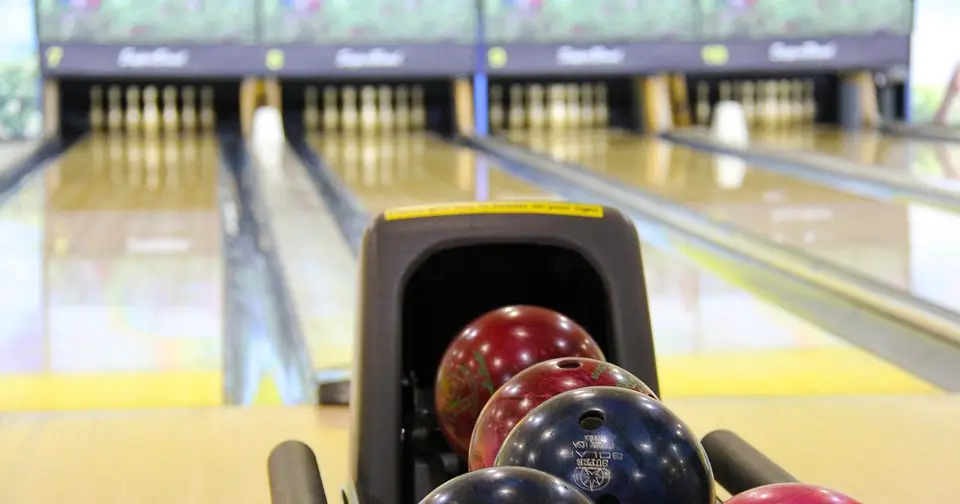
Bowling Alley Insurance Cost 2026: What Centers Pay and What the Policy Must Cover
Bowling alley insurance is a bundle of policies that pays for injury lawsuits, equipment failure, liquor claims, staff injuries and lost income. The center is typically a general liability policy with a property and business income backbone, then equipment breakdown, workers’ comp and liquor liability layered around it.
I will say upfront what I could not find: a reliable published price for a standard center. What exists are small-business marketing numbers, a trade article from 2003 and program details from 2014. They are directional at best. So this guide shows you where the money goes, what each line is for, and how to build a quote comparison that survives a claim. All figures below are as of November 2026 searches, and premiums vary by state.
What does a bowling alley insurance policy cover?
A bowling center needs several coverages working together, because no single policy handles customers, machines, alcohol and employees at once. The core package covers liability to the public, the building and contents, mechanical failure, staff injuries and, if you serve drinks, liquor claims.
| Coverage line | What it responds to | Typical pressure on the bill |
|---|---|---|
| General liability (with products) | Slips on approach areas, thrown balls, dropped balls on feet, food and party claims | Usually the largest liability line |
| Commercial property and business income | Building, lanes, furniture, arcade, income after a covered loss | Scales with replacement cost |
| Equipment breakdown | Pinsetters, ball returns, scoring systems, HVAC, electronics | Modest premium, high value per dollar |
| Workers’ compensation | Counter, kitchen and mechanical staff injuries | Payroll and class-code driven |
| Liquor liability | Bar and event alcohol service | Only if you serve |
| Umbrella | Catastrophic injury above primary limits | Priced per million |
| Abuse and molestation | Youth leagues, camps, parties | Small premium, high stakes |
Insurers that run bowling-specific programs list a similar menu. NIF Group’s program with Liberty Mutual, for instance, was announced as covering property, general liability, crime, equipment breakdown, employment practices, abuse and molestation, auto, umbrella and workers’ comp, according to Insurance Journal’s 2017 report. Programs change, so treat that as a checklist, not a current product description.
How much does bowling alley insurance cost in 2026?
The honest answer is a range of ranges, and none of them is a quote. Here is every number I could source, with its age.
| Source type | Figure | Date | How I would use it |
|---|---|---|---|
| Small-business guide for duckpin alleys | About $500 to $1,100 per year for $1M general liability | Updated February 2026 | Floor for a small, simple operation |
| Another agency page | About $400 to $1,100 per year for $1M general liability | Current marketing | Same caveat |
| Trade article, PropertyCasualty360 | About $2,500 for a very small alley to about $50,000 for a large fun center, liability | 2003 | Shows the spread, not today’s price |
| Specialty program launch, Insurance Journal | $10,000 minimum premium | 2014 | A sign that program business starts higher |
You can read the trade piece at PropertyCasualty360 and the program story in Insurance Journal. I am not blending these into an “average,” because mixing a 2003 number with a 2026 marketing page would manufacture precision.
What I can say with more confidence is what moves the number. A 12-lane neighborhood league house with no bar is a different risk from a 40-lane center with a restaurant, a lounge, an arcade and weekend cosmic bowling. Underwriters look at lanes, square footage, annual revenue, alcohol share of sales, attendance and loss runs. A center with a bar and late-night sessions pays more, and a center with clean loss history and documented maintenance pays less than one without.
Why does general liability matter most at a bowling center?
General liability pays when a guest says your center hurt them, and defends you whether the claim is good or not. At a bowling center that means a slip near the approach, a fall on wet floor near the snack bar, a dropped ball on a foot, or a food-related illness.
Three things to check on the form:
- Limits. The usual structure is $1 million per occurrence and $2 million aggregate. A serious injury can exceed that.
- Defense costs. Find out if defense erodes the limit. If it does, a long case leaves less money for settlement.
- Classification. Confirm your operation is classed as a bowling center and that arcade, parties and events are included, not carved out.
For how general liability is rated and why classification matters, my general liability insurance cost guide explains the premium bases. If you also run a restaurant counter inside the center, remember that a food business has its own claim patterns.
Floor condition is where a lot of premium credibility is earned. Approach areas, oil on lanes tracked to carpet or shoes, and wet entrances are classic slip scenarios. A written daily inspection log, with initials and times, helps both loss control and the claim file if someone does fall.
What happens when pinsetters or ball returns break down?
Pinsetters are the expensive, failure-prone heart of the building, and a typical property form may not pay when they fail on their own. Standard commercial property commonly covers fire, wind and theft, but excludes mechanical or electrical breakdown, so you need equipment breakdown coverage.
Ask your broker four things:
- Are pinsetters, ball returns, scoring consoles and lane controls named or covered as insured equipment?
- How long is the waiting period before business income coverage starts?
- Does income coverage include lost league revenue and prepaid events?
- What is the limit for expediting parts?
Equipment breakdown is sold as an endorsement to a property policy or as a separate policy, and carriers such as The Hartford describe it as covering sudden mechanical or electrical failure while excluding normal wear. My equipment breakdown insurance cost guide goes through the gaps in more detail, and the commercial property insurance cost guide covers valuation, coinsurance and the business income waiting period.
Do not forget the long-lead problem. If a pinsetter model is discontinued, parts can take weeks. Ask if income coverage runs until the lanes are actually back in service or only for a fixed period.
How do liquor liability and the bar change your insurance?
If your center serves beer, wine or liquor, liquor liability is a separate decision. Many general liability policies exclude it, and dram shop laws, which hold sellers liable for over-serving, vary by state.
Practical points:
- Price liquor liability as its own policy or a clearly worded endorsement with its own limit.
- Tell the broker what share of revenue is alcohol and whether you host adult leagues, corporate nights and late sessions.
- Document staff alcohol-service training and ID checks. Underwriters give credit for it.
- Read contracts for outside events, because a tenant’s or event host’s liquor coverage may not protect you.
My liquor liability insurance cost guide explains rating factors, and the logic applies to a bowling lounge exactly as it does to a bar. A “no alcohol on the lanes after 10 p.m.” rule that is posted and enforced is worth more in a claim than a slogan on a menu.
What about staff injuries and the lockout/tagout problem?
Workers’ compensation is required in almost every state once you have employees, and it is priced by payroll in each job class. Counter, kitchen and mechanical staff carry different class codes, so split payroll correctly or you will overpay or face an audit.
Mechanics are the highest-severity group. OSHA has said that bowling pinsetting machinery falls under machine guarding and lockout/tagout requirements, according to its 1990 interpretation letter, which points to 29 CFR 1910.212 and 1910.147. News reports of OSHA citations after a fatal pinsetter incident also cited a missing lockout program. I am not reproducing citation details here because I could not open the underlying documents, but the lesson is plain: write a lockout/tagout procedure, train mechanics, and keep records. The Bowling Proprietors’ Association of America publishes an OSHA compliance manual for members that is a reasonable starting point for your own written program.
For how classification and experience modification drive the bill, see my workers’ compensation insurance cost guide.
Do youth leagues, parties and arcades change what you need?
Yes, and the surprise usually comes from something you forgot to report. Youth leagues add supervision and abuse allegations; parties add food and crowds; arcades and laser tag add separate attractions.
| Operation | What changes | What to ask the broker |
|---|---|---|
| Youth leagues and camps | Supervision, screening, abuse allegations | Abuse coverage limit and screening requirements |
| Birthday parties | Food, crowding, minors | Whether party revenue is rated and any food exclusions |
| Cosmic and late-night bowling | Lighting, alcohol, security | Whether late hours or alcohol change class or limits |
| Arcade, laser tag, climbing | Other attractions in the same building | Whether they are included, scheduled or excluded |
| Tournaments | Outside organizers, travel, crowds | Certificates and additional insured requirements |
If your center is turning into a broader entertainment venue, look at how a similar jump in complexity is handled in the trampoline park insurance cost guide. The point is the same: the extra attraction is the part that often has its own exclusion, waiver requirement or rate.
What does a bowling alley claim failure look like?
This is an illustrative composite, not a real case. A center added a lounge and kept its original general liability policy, assuming the bar was “just part of the business.” A patron was served past the point of intoxication, left, and caused a car crash. The general liability form excluded liquor-related claims, the center had no liquor policy, and the owner paid for the defense out of operating cash while the carrier reserved its rights.
The fix was a liquor liability policy that cost a fraction of the legal bill, plus a written service policy and staff training. The lesson is not that coverage is expensive. It is that an exclusion buried in the form quietly decides who pays.
How do you shop for bowling alley insurance?
Start by preparing one coverage sheet. List limits, deductibles, liquor liability, equipment breakdown, income waiting period, abuse coverage and the attractions you operate. Send the same sheet to at least three brokers who write recreation or bowling programs, and ask for exclusions in writing.
Gather before they ask:
- Five years of loss runs.
- Lane count, square footage, revenue split (lanes, food, alcohol, arcade, parties).
- Payroll by job class, with mechanics shown separately.
- Age and model of pinsetters and scoring systems.
- Your written lockout/tagout program, inspection logs and incident reports.
Check licensing on the broker and the carrier in your state through your state insurance department, and read the SBA’s guide on business insurance for a plain-language list of core coverages. When the umbrella question comes up, my commercial umbrella insurance cost guide explains how excess limits are priced. A serious head or spine injury can pass a $1 million occurrence limit quickly.
Two practical habits make the quotes easier to read. First, ask every broker whether the quote is admitted or surplus lines. Surplus-lines policies can be perfectly legitimate for recreation risks, but they are not backed by the state guaranty fund the way admitted policies usually are, and the paperwork and taxes differ. Second, ask each broker to state in writing whether pinsetter work, youth leagues and cosmic bowling were disclosed to the carrier. A quote built on an incomplete application can look cheap right up to the day a claim is denied for misrepresentation.
Finally, calendar the renewal. Start collecting loss runs and updated revenue figures about 90 days ahead, because a rushed renewal is where owners accept whatever the incumbent offers. If you added a bar, an arcade or a party room during the year, tell the carrier at the time of the change, not at renewal, and ask for the endorsement in writing.
Compare total cost against total coverage, and be suspicious of the cheapest quote. Cheap often means a participant exclusion, a liquor carve-out, a low sublimit on abuse, or a long income waiting period.
This article is general information, not insurance, legal, or financial advice. Premium figures cited come from marketing pages, a 2003 trade article and a 2014 program announcement and are not current quotes. Confirm coverage, state rules and pricing with a licensed broker.
How much does bowling alley insurance cost?
There is no reliable published national average. Small-business sites quote about $400 to $1,100 a year for $1 million of general liability, but those figures sit closer to duckpin centers and arcades than a 24-lane center with a bar. A 2003 trade article put liability premiums from roughly $2,500 for a very small alley to about $50,000 for a large fun center, and a bowling program launched in 2014 carried a $10,000 minimum premium. Treat all of these as dated or marketing numbers and get written quotes.
What insurance does a bowling alley need?
General liability with products coverage, commercial property and business income, equipment breakdown for pinsetters and electronics, workers' compensation, liquor liability if you serve alcohol, and usually commercial auto if you run a shuttle. Add an umbrella for serious-injury limits, and ask about abuse coverage if you run youth leagues or camps.
Does general liability cover a bar inside the bowling center?
Often not. Many general liability forms exclude liquor-related claims, so a patron who is over-served and later injures someone can fall outside the policy. Price a separate liquor liability policy or a liquor endorsement with its own limit.
Are pinsetters and ball returns covered?
A standard property form commonly excludes mechanical or electrical breakdown. Equipment breakdown coverage, sold as an endorsement or separate policy, is the line that typically responds to motor burnout, power surges and control failures. Ask about waiting periods and lost-income coverage.
Does the bowling league's insurance cover accidents in my center?
Not automatically. Leagues and sanctioning bodies may carry their own coverage, but your center remains responsible for your premises. Ask for certificates naming you as additional insured for tournaments and rentals, and confirm what your own policy does with participant injuries.
Do birthday parties and cosmic bowling change the premium?
They can. Parties, group events, alcohol and late-night sessions change attendance patterns and claim exposure. Report them accurately on the application, because an undisclosed operation is a classic reason for a denied claim.
Is workers' comp expensive for a bowling center?
It is payroll-driven and class-code-driven, so it depends on your state and how staff are split between counter, kitchen and mechanical work. Mechanics who service pinsetters carry real hazard, and OSHA has cited centers for missing lockout/tagout programs, so documented safety training helps your underwriter conversation.
How can I lower my bowling alley insurance premium?
Keep lane-surface, floor and approach maintenance logs, document staff training and incident reports, write a lockout/tagout program for pinsetter work, and send every broker the same coverage sheet. Raise deductibles only to a level you can pay in cash.
Do I need a family entertainment center policy instead of a bowling policy?
If you add arcade games, laser tag, climbing, or inflatables, tell the broker. Some bowling programs treat extra attractions as separate classes with their own rating or exclusions, and an unscheduled attraction can leave a gap.
관련 글

Ice Skating Rink Insurance Cost 2026: Coverage, Price Drivers, and How to Shop
Wedding Venue Insurance Cost in 2026: What Owners Pay and What Each Policy Covers
Campground Insurance Cost in 2026: What RV Parks and Campgrounds Pay and Why

Title Insurance in 2026: Owner's Policy vs Lender's Policy — What Every Homebuyer Must Decide at Closing

Commercial Trucking Insurance Cost 2026: A Broker's Plain-English Guide for Owner-Operators and Fleets