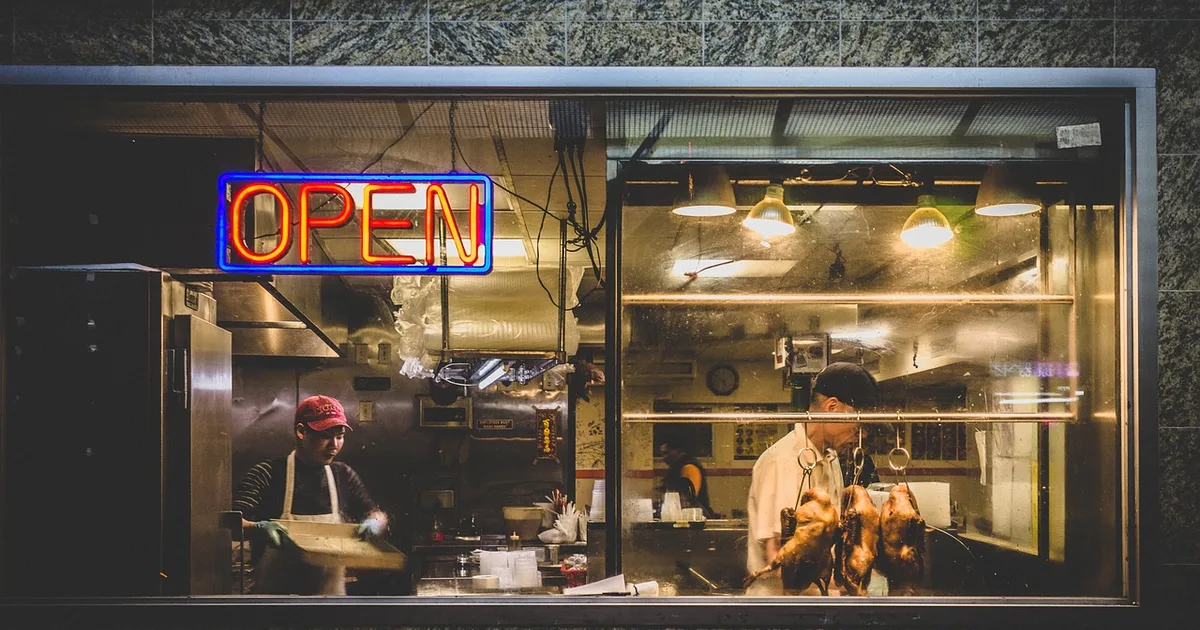
Franchise Loan Requirements 2026: How Franchise Financing Really Works
What are franchise loan requirements?
Franchise loan requirements are the conditions a lender sets before funding a franchise purchase: an eligible brand, your own cash in the deal, acceptable credit, relevant experience, collateral where available, and cash flow that can cover payments. For most buyers the lender is an SBA 7(a) lender, so the brand’s eligibility matters as much as your own file.
I’ve read through the SBA’s franchise directory page, the FTC’s franchise guidance, and the IRS’s published findings on retirement-funded startups to write this. My view after that: buyers over-focus on the interest rate and under-focus on the three things that actually decide the outcome, which are whether the brand is financeable, how much cash you can credibly bring, and whether the FDD’s numbers survive contact with a lender’s spreadsheet. Everything below is a map for early planning. Rules, SBA policy and lender cutoffs change, so verify against the sources linked and with a lender before you sign a franchise agreement.
How does SBA 7(a) work for a franchise purchase?
The SBA does not lend the money; a bank or other participating lender does, and the SBA guarantees part of it. That guarantee is why lenders approve borrowers they might decline on a conventional basis. The program is described on the SBA’s 7(a) loan page, and for the general mechanics you can read our SBA 7(a) loan guide.
For a franchise, the 7(a) typically covers the franchise fee, build-out, equipment, opening inventory and some working capital. Here is how the common financing routes compare on the points buyers ask about most:
| Route | Typical down payment | Term | Best for | Watch out for |
|---|---|---|---|---|
| SBA 7(a) | Often at least 10% | Up to 10 years for working capital and equipment, longer when real estate is included | First-time owners with limited cash | Fees, paperwork, personal guarantee |
| SBA 504 | Often 10% and up | Long, fixed-rate on the real-estate portion | Buying the building | Only for fixed assets; see our 7(a) vs 504 comparison |
| Conventional bank loan | Often 20% to 30% | Shorter | Strong credit with collateral | Higher cash needed |
| Franchisor financing | Varies | Varies | Fees or equipment | Terms tied to the franchisor’s interests |
| Equipment financing | Often 10% to 20% | Matched to equipment life | Kitchen, fitness or salon gear | Lien on the equipment; see equipment financing |
The ranges above are what lenders and brokers commonly describe, not rules. A lender can ask for more, and SBA policy can shift the minimums.
Is my franchise on the SBA Franchise Directory?
The SBA Franchise Directory is a list on sba.gov that lenders use to confirm a brand’s franchise agreement meets SBA eligibility rules. If your brand is listed, a lender can usually move faster. If it isn’t, the lender has to review the franchise agreement itself against SBA rules, and many simply decline.
Two cautions about this directory. First, listing is about the brand, not you. A listed brand can still be a bad fit for your credit or your market. Second, the rules around the directory have changed in recent years. Some secondary sources say recent SBA procedures require franchisors to be listed and to recertify, and that brands that missed a 2026 deadline were removed; I could not confirm that detail from the SBA’s own text, so check the brand’s status on the directory page the day you apply and ask the lender what version of the SBA’s operating procedures they are applying.
Why would a brand be ineligible? The SBA looks for whether the franchisor keeps so much control over operations or profits that the franchisee is not really an independent owner. If you are comparing brands, that is a screening question to put to the franchisor’s development team early.
What do FDD Item 7 and Item 19 tell a lender?
The Franchise Disclosure Document, required under the FTC Franchise Rule, has 23 items, and two matter most for financing. Item 7 sets out the estimated initial investment, and Item 19 holds any financial performance representation the franchisor chooses to make.
| FDD item | What it contains | How a lender uses it |
|---|---|---|
| Item 5 | Initial franchise fee | Sizing the loan |
| Item 6 | Other fees (royalties, ad fund) | Stress-testing cash flow |
| Item 7 | Estimated initial investment range, including additional funds | Total project cost and working capital |
| Item 19 | Optional earnings claim, with conditions | Sanity check on your projections |
| Item 20 | Outlet counts, openings, closures | Brand health and turnover |
| Item 21 | Franchisor financial statements | Is the franchisor stable? |
The FTC’s consumer guidance explains that Item 19 is optional, but if a franchisor wants to make earnings claims at all they must appear there, and sellers can’t make financial performance claims outside it. So a franchisor that says nothing in Item 19 and then promises numbers in a sales call is a flag. The FTC also says you should receive the FDD at least 14 calendar days before signing or paying, which gives you a real window to take it to a lender and an attorney. The rule text is in 16 CFR Part 436.
A practical tip: Item 7 usually shows a range, and the high end is the one to budget around. Lenders lean toward the conservative number, and underfunded openings are a common reason new units struggle.
How much down payment or equity injection do I need?
For SBA-backed franchise loans, plan on at least 10% of the total project cost as your own cash, and for a conventional bank loan, plan on 20% to 30%. These are common lender ranges rather than fixed rules, and lenders may ask for more if your credit, experience, or collateral is thin.
The equity injection is the cash you contribute from your own resources. Two practical points trip people up:
- The source of cash gets checked. Lenders review bank statements. Cash that appears out of nowhere shortly before applying draws questions, so move money early and document it.
- What counts depends on the rules in force. Gift funds and certain seller or franchisor arrangements may count in limited ways under SBA procedures. Ask the lender for their written view before you rely on them.
Consider a composite example (illustrative, not a real client): a buyer sees an Item 7 range of $350,000 to $520,000 for a fast-casual unit. Budgeting at the high end, a 10% injection is $52,000 and a 20% injection is $104,000, before any cash set aside as a personal reserve. If the buyer only has $50,000, the better move is a smaller-format brand or a different concept, not a stretched loan.
What credit, experience, and collateral do lenders want?
Lenders commonly look for a personal credit score in the mid-600s or higher, a clean recent history without recent defaults, and relevant management or industry experience. If you’ve never run a business, a brand with strong training can offset some of that, because lenders care how much of the operating knowledge is in the system rather than in you.
| Factor | What lenders commonly look for | If you fall short |
|---|---|---|
| Credit score | Around 650 to 680 or higher is often cited | More equity, a co-signer, or time to improve; see our credit score guide |
| Experience | Management or industry background | Pick a brand with strong training |
| Collateral | Business assets, sometimes real estate or a lien on a home | Smaller loan or more cash in |
| Debt service coverage | Projected cash flow above payments with a cushion | Lower the loan or raise cash |
| Personal guarantee | Typically required of owners with a significant share | Understand what you’re pledging |
On collateral, SBA lenders are generally expected to take available business collateral and may ask for personal assets too when business assets fall short. Do not assume that “no collateral” means “no personal exposure”; the personal guarantee is the real commitment. For the broader picture of early-stage lending, see our startup business loan requirements.
Can franchisor financing or third-party lenders help?
Yes, in different ways. Some franchisors finance parts of the opening cost, such as fees or equipment, or maintain relationships with preferred lenders. A preferred lender can be useful because it already knows the brand’s economics and paperwork, but “preferred” is a commercial relationship, not independent advice.
Compare any franchisor offer against at least one independent SBA lender on four points: total cost, term, whether the financing is tied to staying in the system, and what happens on default. For general loan-type tradeoffs, our business loan guide and line of credit vs term loan comparison are good companions. Equipment-heavy concepts such as gyms, salons and kitchens can also use separate equipment financing so the SBA loan stays focused on the build-out and working capital.
Is using retirement money (ROBS) a safe way to fund a franchise?
ROBS means you roll retirement savings into a new corporation’s retirement plan, which then buys the corporation’s stock to fund your business. It avoids early-withdrawal tax if done correctly, but it puts your retirement savings at risk and the structure has to be maintained properly.
The IRS has published findings on its compliance work in this area, and it has flagged problems when the plan or corporation isn’t set up or operated properly. You can read the IRS ROBS compliance project report. My read: ROBS is a legitimate structure, but it is expensive to set up and monitor, and when the franchise struggles you lose business capital and retirement money at the same time. Never let a promoter describe it as risk-free. Use an independent attorney or tax adviser, not only the vendor selling the plan, and consider combining a smaller ROBS amount with an SBA loan instead of funding everything from retirement accounts.
What documents should I gather for a franchise loan application?
Gather the paper before you talk to lenders, because speed and completeness signal a serious borrower. A typical checklist:
- The FDD and your signed receipt, plus the franchise agreement draft
- Franchisor approval or a letter confirming your territory or site
- A business plan with 3-year projections and clear assumptions
- Personal financial statement and 2-3 years of personal tax returns
- Business tax returns if you already own a company
- Recent bank and brokerage statements showing the source of your cash
- Résumé showing management or industry experience
- Lease or letter of intent for the site, and contractor bids for build-out
- Entity documents (LLC or corporation) and the ownership split
- Schedule of debts and any collateral you can pledge
Ask each lender for its own checklist, since SBA lenders add forms and some want the franchisor’s lender package.
What mistakes sink franchise loan applications?
Most denials trace back to avoidable errors. A composite example, not a specific person: a buyer signs a franchise agreement and pays the fee, then applies for an SBA loan, and learns the brand isn’t eligible or that the lender needs more cash than they have. The fee may be hard to recover. Order matters, so confirm financing before commitment.
Other common mistakes:
- Budgeting to the low end of Item 7. Underfunded openings run out of working capital in the first months.
- Treating Item 19 as a forecast. It describes other locations under stated conditions.
- Shopping one lender. Terms, fees and appetite for franchise deals vary; get at least two or three.
- Ignoring the personal guarantee. You are usually pledging personal assets, not just the business.
- Moving cash late. Unseasoned deposits create documentation problems.
- Skipping legal review. A franchise attorney should read the agreement before you sign, and a CPA should check the projections.
Also compare fees: SBA guarantee fees, packaging fees, closing costs and franchisor transfer or training fees add up and can change which route is cheapest.
What should I do first if I want to buy a franchise?
Start with the brand and the numbers, not the loan. Pull the FDD, read Items 5, 6, 7, 19, 20 and 21, check the brand on the SBA Franchise Directory, talk to current and former franchisees listed in Item 20, and build your own projection with a conservative sales case. Then speak with two or three lenders, including at least one that regularly does franchise deals, and have an attorney review the agreement during the 14-day window.
If the numbers only work at the optimistic end, that is useful information. A smaller brand with a lower investment, or waiting a year to build equity, is usually better than a stretched loan on a business you can’t afford to see struggle.
This article is general information as of October 2026, not legal, tax or financial advice. Franchise and SBA rules, lender requirements and rates change; confirm details with the SBA, a participating lender, a franchise attorney and a tax professional before committing.
What are the franchise loan requirements in 2026?
Lenders generally want a franchise brand that is eligible for SBA financing, a personal credit score often in the mid-600s or higher, your own cash injected into the deal (commonly at least 10% of the project, sometimes 20% or more), relevant experience, and enough projected cash flow to cover debt service. Exact cutoffs vary by lender and by the brand, so treat any single number as a starting point.
What is the SBA Franchise Directory?
It is a list on sba.gov that SBA lenders use to check whether a franchise brand's agreement meets SBA eligibility rules. Being listed helps a lender approve a franchisee faster, but it is not a loan approval and it does not guarantee your own file will qualify. Confirm the brand's current status on the directory itself, because listings have been changing.
How much down payment do I need to buy a franchise?
Plan on at least 10% of total project cost as your own cash for an SBA-backed loan, and expect 20% to 30% for a conventional bank loan. Startups and weaker-credit borrowers are often asked for more. Item 7 of the franchisor's FDD tells you the total cash the franchise expects you to need.
Can I get a franchise loan with bad credit?
It is harder but not impossible. SBA lenders commonly look for scores around 650 to 680 or higher, with some flexibility if cash flow, experience, and equity are strong. With a score below that range, expect to need a larger down payment, collateral, or a co-borrower, and compare other options carefully.
Does the franchisor lend me money?
Some franchisors offer financing for fees, equipment, or build-out, or they have partnerships with third-party lenders. Terms vary a lot, and the franchisor's incentive is to sell the franchise, so compare their offer with an independent SBA lender before you accept it.
What is an equity injection?
It is the cash you put into the project from your own resources, as opposed to borrowed money. For SBA loans, lenders check where the cash came from. Gifts and, in some cases, seller notes may be counted under specific rules, so ask the lender what counts before you move money.
What is ROBS and is it safe for franchise funding?
ROBS, or Rollovers as Business Startups, moves retirement savings into a new C corporation's plan to buy company stock, so you avoid early-withdrawal penalties. The IRS has flagged compliance problems with these arrangements, and your retirement savings are tied to the business's success. Talk to an independent ERISA attorney and tax professional before using one.
What do I need to give a lender for a franchise loan application?
Expect the signed FDD receipt and FDD, the franchise agreement draft, a business plan with projections, personal financial statement, tax returns, bank statements, a résumé, and proof of your cash injection. The lender usually also asks for the franchisor's approval letter and a site or lease document.
Is FDD Item 19 a guarantee of what I will earn?
No. Item 19 is an optional financial performance representation, and if the franchisor makes any earnings claim it must be in Item 19. It describes past results of certain outlets under stated conditions, not what your location will earn. Read the footnotes for what was included and excluded.
Should I use an SBA 7(a) loan or a conventional loan for a franchise?
SBA 7(a) typically offers longer terms and a smaller down payment, which can lower the monthly payment, but it adds fees and paperwork. A conventional bank loan can be faster for a strong borrower with collateral. Get quotes on both and compare the total cost, not just the rate.
관련 글

Startup Business Loan Requirements in 2026: What Lenders Want From a New Business
Bad Credit Business Loan Options in 2026: What You Can Qualify For and What to Avoid
Cash-Out Refinance Rates and Requirements in 2026: LTV Limits, Costs, and HELOC Comparison

Farmland Investing 2026: Direct Ownership vs REITs vs Platforms

Korea Golden Week Travel: No-Fee Travel Card vs Currency Exchange — What Actually Saves Money